
The 96 well plate volume you put in each well is more than a question of what fits. In a shaken culture it sets how much oxygen the cells receive, and in every plate it is a number the next person needs in order to repeat your result. Two open access papers measured the first effect directly, one in wells filled with 100 to 260 µL and one in deep wells filled with 200 to 1000 µL. This article sets out what they report, what they leave out, and what to record about volume in your own plate method.
A smaller volume gave more oxygen in a standard 96 well plate
Kensy, Engelbrecht and Büchs grew Escherichia coli and the yeast Hansenula polymorpha in 96 well plates shaken at 995 rpm with a 3 mm shaking diameter, covered with a gas permeable membrane. Their standard working volume was 200 µL per well. To see what volume does to oxygen supply, they used a sulfite test, a chemical reaction that consumes oxygen at a rate you can measure, and varied the filling volume from 100 to 260 µL (Kensy et al., 2009).
The maximum oxygen transfer rate was 0.017 mol/L/h at 260 µL, which corresponds to a kLa of 97 per hour. At 100 µL it was 0.052 mol/L/h, a kLa of 297 per hour. That is about three times as much oxygen per litre of liquid from a volume that is a little over a third as large. The authors attribute it to the larger specific surface area at lower volumes: a thinner layer of liquid has relatively more surface to take up oxygen through (Kensy et al., 2009).
They also say what they would have preferred. For oxygen transfer, filling volumes of 100 to 120 µL would be better, but they used 200 µL so that sufficient liquid was available. Read that as a trade, not an error. A small volume feeds the cells better and leaves you less liquid to sample, read or split. Which side you choose depends on your assay, and the point is to choose it on purpose (Kensy et al., 2009).
Deep well plates: 200 to 1000 µL, and a floor of 400
Neuss and co-workers took CHO cells from 96 deep well plates up to shake flasks and a stirred tank reactor. In the plates they varied the filling volume from 200 to 1000 µL, with shaking at 850 rpm and a 3 mm diameter, in both round and square wells. They report a minimum cultivation volume of 400 µL in these plates. They calculated a maximum oxygen transfer capacity of 10.5 mmol/L/h for the plates and 10.2 mmol/L/h for the shake flasks, and by matching that value the plates and flasks gave comparable cultivation conditions (Neuss et al., 2025).
One detail matters for the plate you buy. The authors note that square wells put more stress on cells, because the corners work like baffles. So a volume number only makes sense together with the well shape. 400 µL in a round deep well and 400 µL in a square one are not the same experiment (Neuss et al., 2025).
Position changes the result as well as volume
Volume is one source of well to well difference. Position is another. In 72 hour cultures of mammalian cells measured with MTS, wells in the outer ring gave readings up to 35 percent lower than central wells on plates from one supplier, and loosely sealed wrapping during incubation reduced the effect (Mansoury et al., 2021). We went through that paper, and what to do about it on a plate map, in our 96 well plate template article.
What to record about volume in your own method
Neither paper hands you a table of volumes to copy, and a table from a catalogue would not replace the datasheet of your own plate anyway. What they do give you is a short list of things to write down, so that the volume is a defined part of the method and not a habit:
- the plate type: standard or deep well, round or square wells, and the manufacturer and article number;
- the filling volume in µL per well, and the same volume in every well on the plate;
- the seal: a gas permeable membrane, a foil or a lid;
- the shaking frequency and the shaking diameter, if the plate is shaken;
- where on the plate each sample sits, including the outer ring.
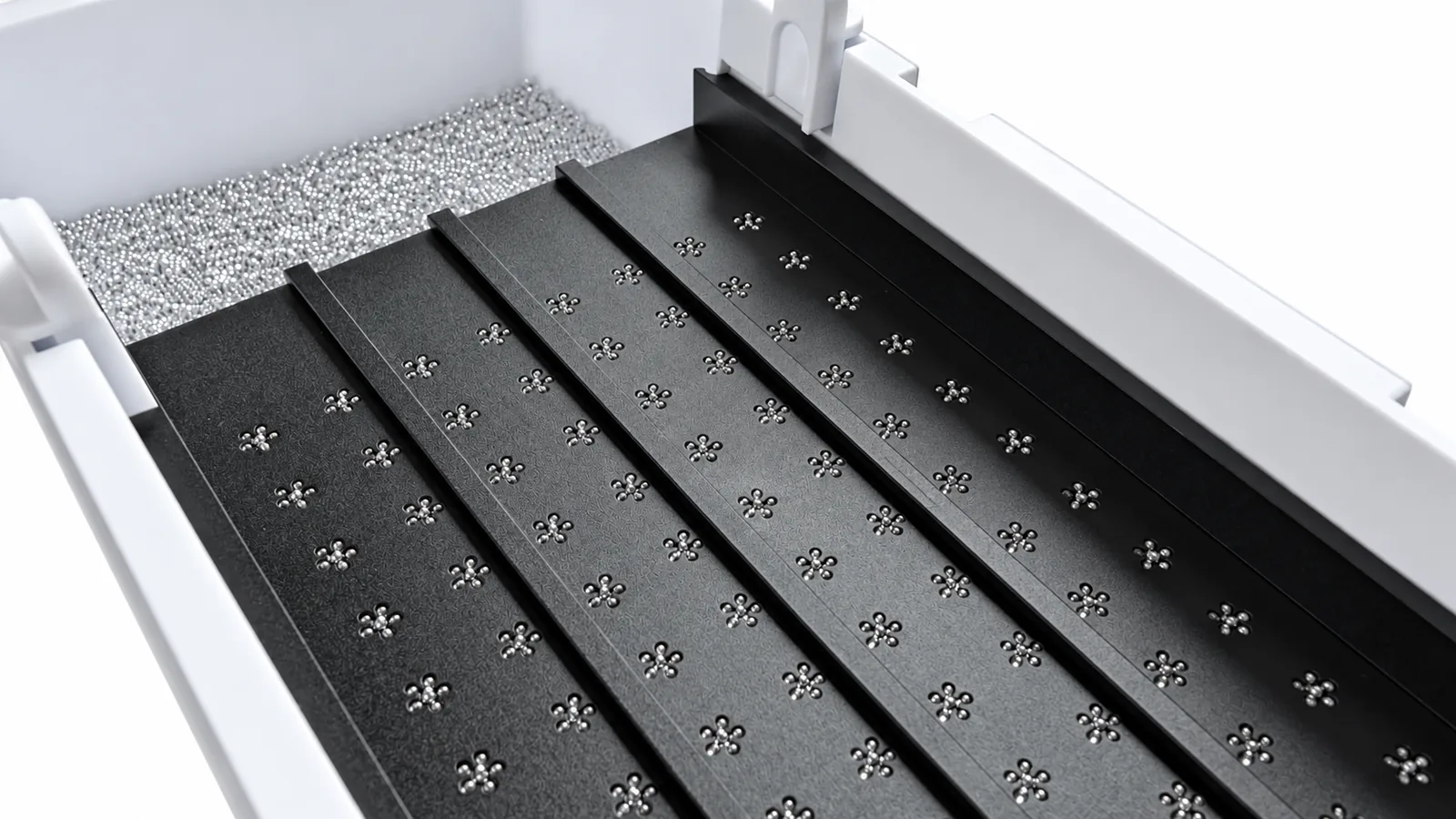
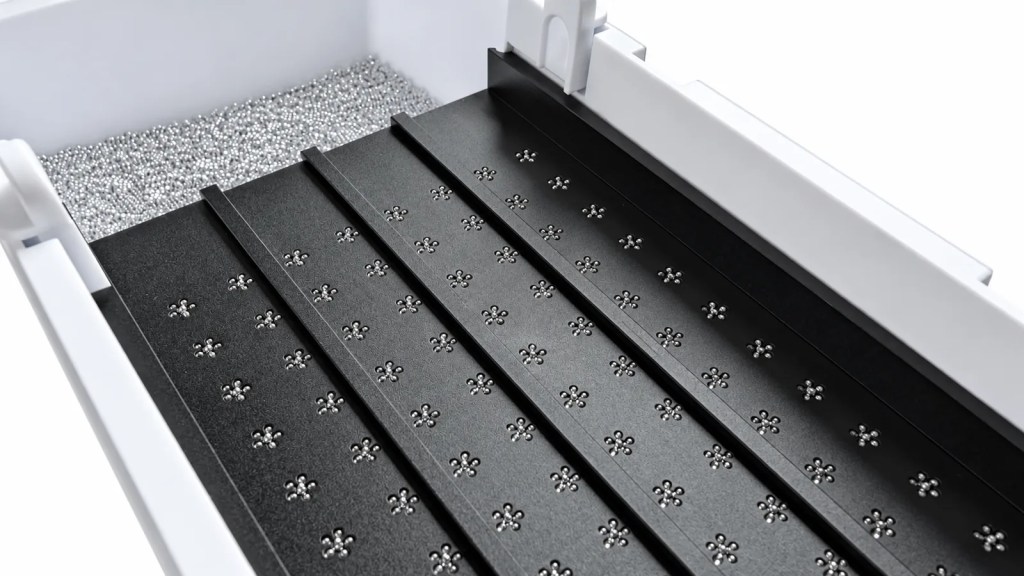
If the wells hold powder, beads or seeds instead of liquid, the same rule holds: record an amount per well, with a unit. The 96-Well Powder Dispenser doses the same volume of powder into all wells of a plate, the 96-Well Bead Dispenser gives each well the same count of beads, and the 96-Well Seed Dispenser places one seed per well. We looked at how published protocols state bead amounts in tissue homogenizer beads: how many per tube or well, and the mesh plate that sets the amount is explained in how to choose the right mesh plate.
What this does not cover
Both studies grew cells in liquid and shook the plate. They say nothing about PCR volumes, reagent volumes in assay plates, or the dry fill of powders, beads or seeds. The sulfite test in the first paper is a chemical model of oxygen uptake, not a growth result, and the second paper used one cell line. A dispenser fixes the amount that goes into each well. It does not choose the culture volume, the plate shape or the shaking settings for you.
Limits of this summary
We read the open access article pages, not the supplementary files. The outer ring result from Mansoury and co-workers is taken from our earlier article and was not read again for this one. The two papers use different plates, organisms and shaking settings, so their numbers show a direction, not a target for your own plate.
Sources
- Kensy F, Engelbrecht C, Büchs J. Scale-up from microtiter plate to laboratory fermenter: evaluation by online monitoring techniques of growth and protein expression in Escherichia coli and Hansenula polymorpha fermentations. Microbial Cell Factories. 2009;8:68. https://doi.org/10.1186/1475-2859-8-68 (CC BY 2.0)
- Neuss A, Steimann T, Tomas Borges JS, et al. Scale-up of CHO cell cultures: from 96-well-microtiter plates to stirred tank reactors across three orders of magnitude. Journal of Biological Engineering. 2025;19. https://doi.org/10.1186/s13036-024-00475-8 (CC BY 4.0)
- Mansoury M, Hamed M, Karmustaji R, Al Hannan F, Safrany ST. The edge effect: A global problem. The trouble with culturing cells in 96-well plates. Biochemistry and Biophysics Reports. 2021;26:100987. https://doi.org/10.1016/j.bbrep.2021.100987
Written by Bas Millenaar, LabTIE International B.V., labtie.com. LabTIE builds manual seed, bead and powder dispensers for 96 well plates, 384 well plates, tubes and vials.
Leave a Reply