
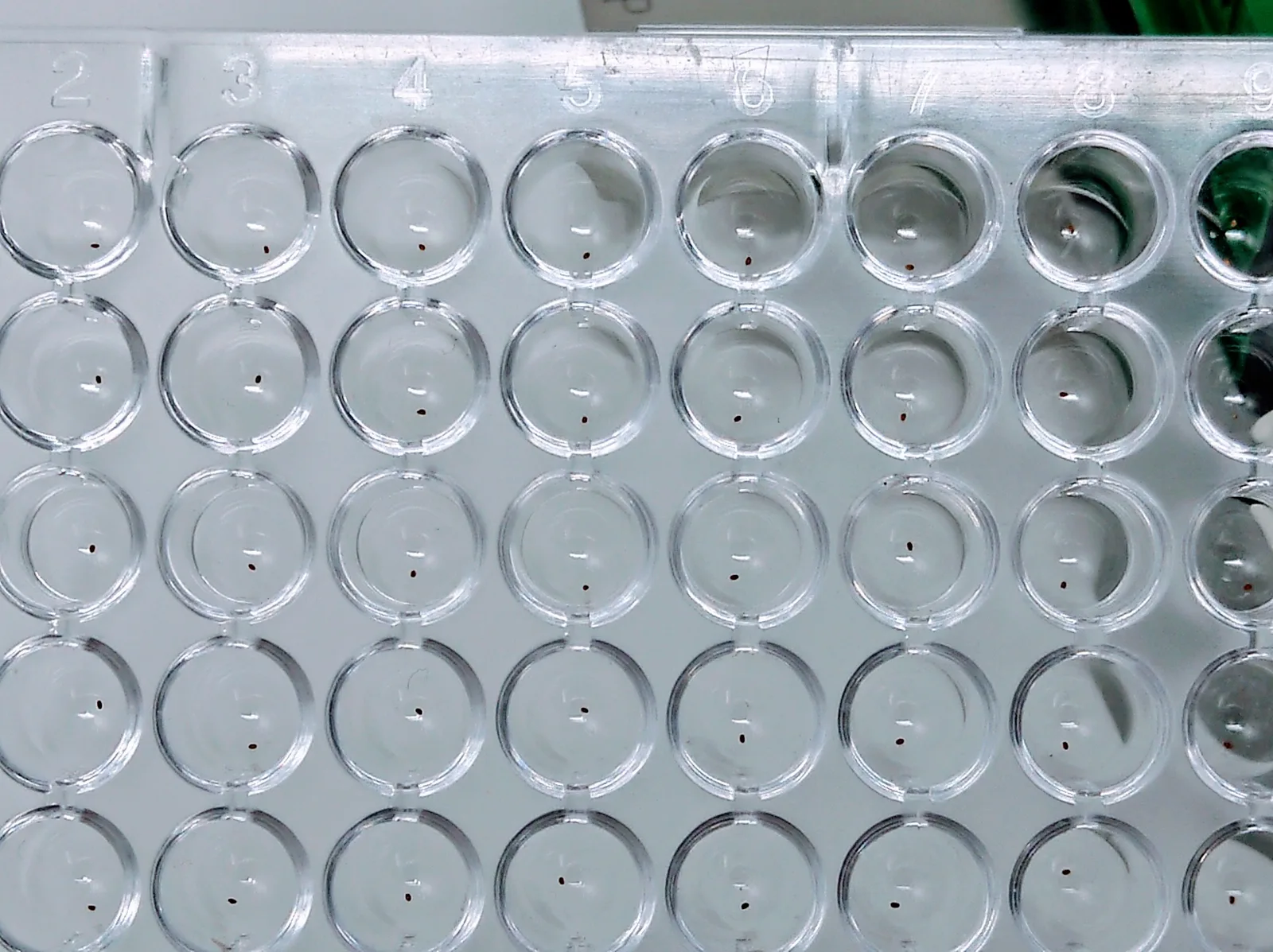
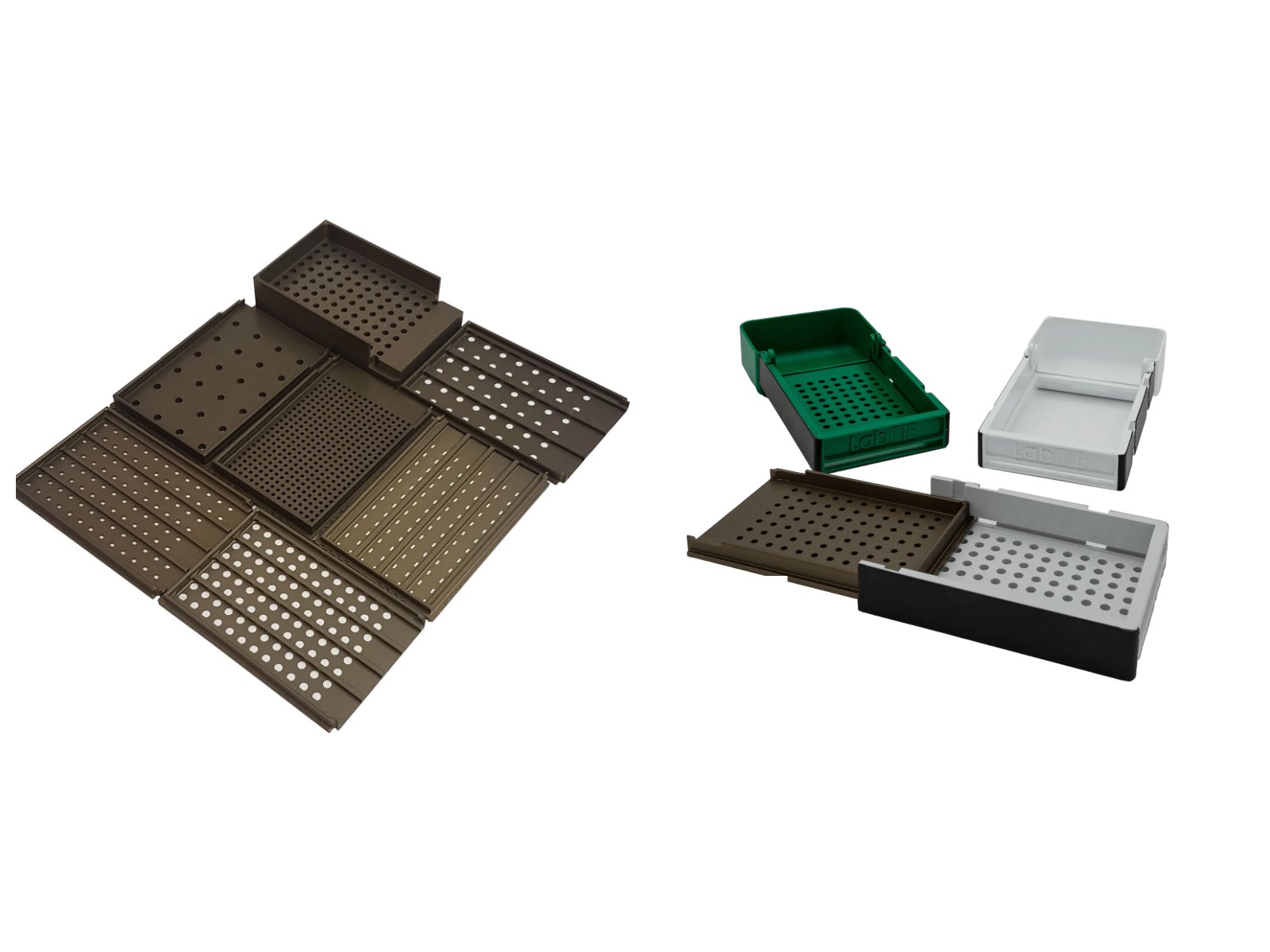
Nine standard seed dispensers
Every format below is a standard build, ready to configure with the mesh plate matched to your seed.
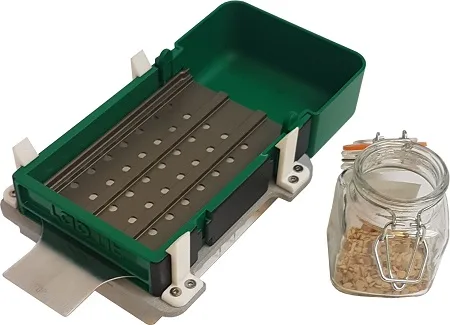

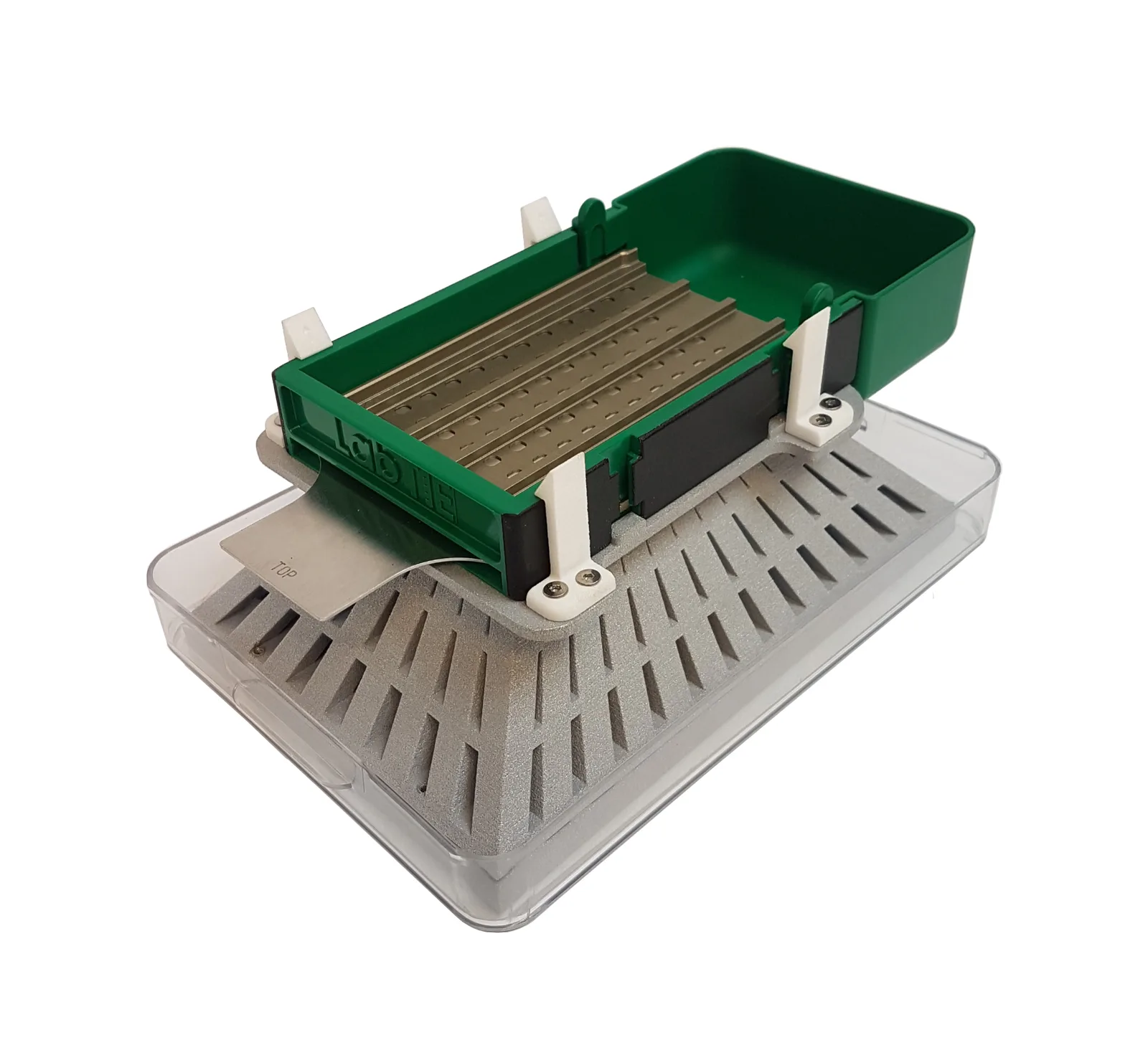
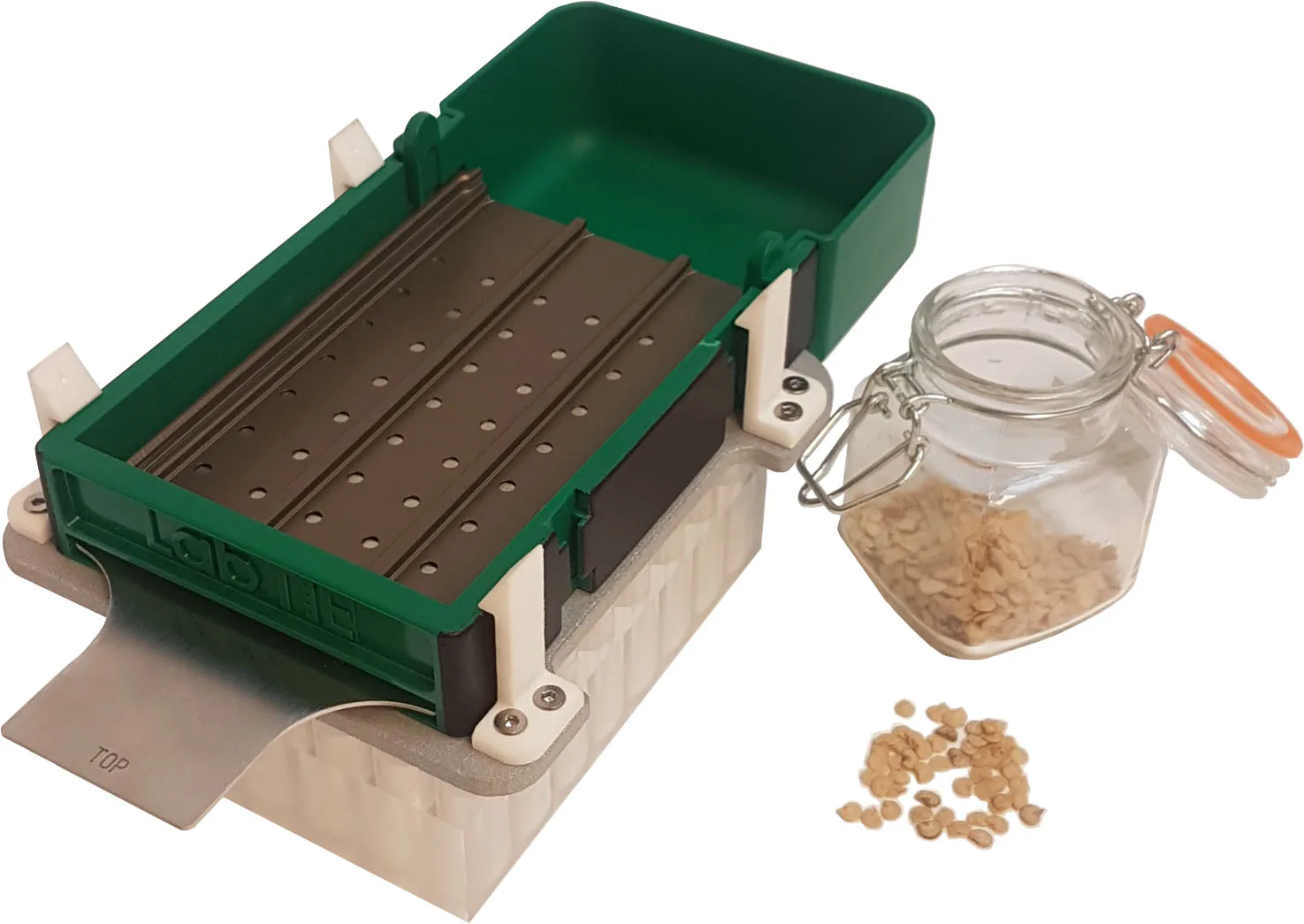


Fill, place, analyse or grow

What researchers say
“Ideal for fast filling of steel balls in 96 well format. Filling only a few rows is also possible. The dispenser is easy to use and any surplus of balls is easy to gather again.”
“A tool that must not be missed in any laboratory. It solves the problem of manually dropping and missdropping beads into plates. What used to take minutes is now done in seconds.”
“We searched for a bead dispenser for 96 well plates for over ten years and struggled to find something reliable. What used to be tedious and time consuming is now done in a few seconds.”
Seed, germination and grinding reference
The numbers labs ask us for most: how far apart to sow each seed, how deep to cover it, and which beads and speed to grind it with for seed DNA.
Sowing distance and depth by seed type
Starting points for germination trays and plates. Adjust for cultivar and substrate.
| Seed type | Seed size | Spacing on tray | Sowing depth |
|---|---|---|---|
| Arabidopsis thaliana | 0.3 to 0.5 mm | 3 to 5 mm | Leave on the surface, light required |
| Lettuce | 1 to 2 mm | 8 to 10 mm | Leave on the surface, light required |
| Brassica and cabbage | 1.5 to 2.5 mm | 10 mm | 5 to 10 mm |
| Onion | 2 to 3 mm | 8 to 12 mm | 5 to 10 mm |
| Tomato and paprika | 3 to 4 mm | 12 to 15 mm | 5 mm |
| Wheat | 5 to 8 mm | 15 to 20 mm | 10 to 20 mm |
| Maize | 8 to 12 mm | 25 to 30 mm | 20 to 30 mm |
Useful shortcut: allow at least one and a half seed widths between seeds, and cover to roughly the length of the seed itself. Compiled from ISTA and FAO seed testing guidance and our own customers’ protocols.
Grinding seed: which media for which sample
Match the media to the hardness of the seed and the volume of the vessel, not to the plate format.
| Sample | Beads or media | Vessel | Notes |
|---|---|---|---|
| Small fresh seed: Arabidopsis, lettuce, brassica | 3.0 mm zirconia with a 2.8 mm steel ball | Tube or deepwell plate | One or two beads per well is enough |
| Medium seed: tomato, paprika | A single 4 to 6.3 mm steel or zirconia ball | 2 mL tube or 4 mL vial | Cut the sample back to 50 mg or less first |
| Cereal and hard seed: wheat, maize | Three 3.2 mm balls, or one 6.3 mm chrome steel ball | Reinforced vial | Usually powdered inside half a minute |
| Very hard or oily seed: palm, sunflower | Tungsten carbide, or grind cryogenically | Steel vial | Steel on its own often will not carry enough energy |
| Leaf punches for genotyping | One 4 mm steel or zirconia ball | 96 deepwell plate | About five punches, up to 50 mg |
Choose zirconia or silica when the buffer is corrosive or phenol based, or when metal ions would interfere. Scale bead mass to sample mass rather than filling the well. Drawn together from published bead beating guidance and lab feedback.
Homogenising method and speed
Which instrument suits which job, and where to start on speed and run time.
| Method | Typical speed | Media | Best for |
|---|---|---|---|
| Oscillating bead mill | 25 to 30 Hz, 30 s up to 2.5 min | Matched to the sample | Plates and tubes; DNA, RNA and protein |
| Reciprocating grinder | Around 1500 rpm, 1 to 2 min | 4 mm steel or zirconia balls | Seed and leaf DNA at high throughput |
| Vortex with a plate adapter | Full speed, 2 to 10 min | 0.1 to 0.5 mm beads | Microbes, spores and soft tissue |
| Cryogenic mill | Dry grind under liquid nitrogen | Steel or tungsten carbide | Hard or oily seed, and high molecular weight DNA |
Work in short bursts with pauses to cool, since heat damages nucleic acids. The larger and harder the seed, the denser the media and the more energy it takes.
Precision seed dispensing for plant breeding and germination research
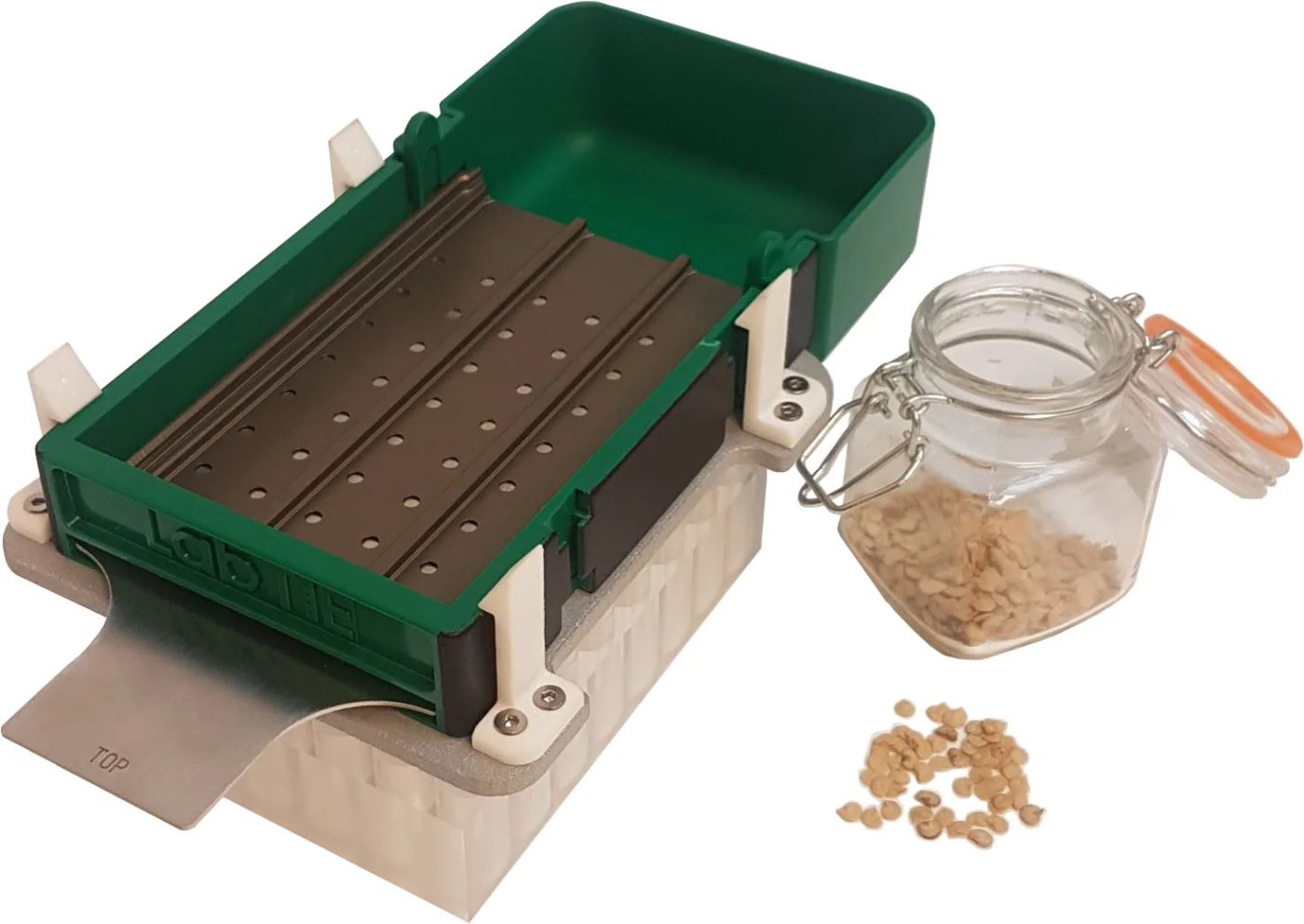
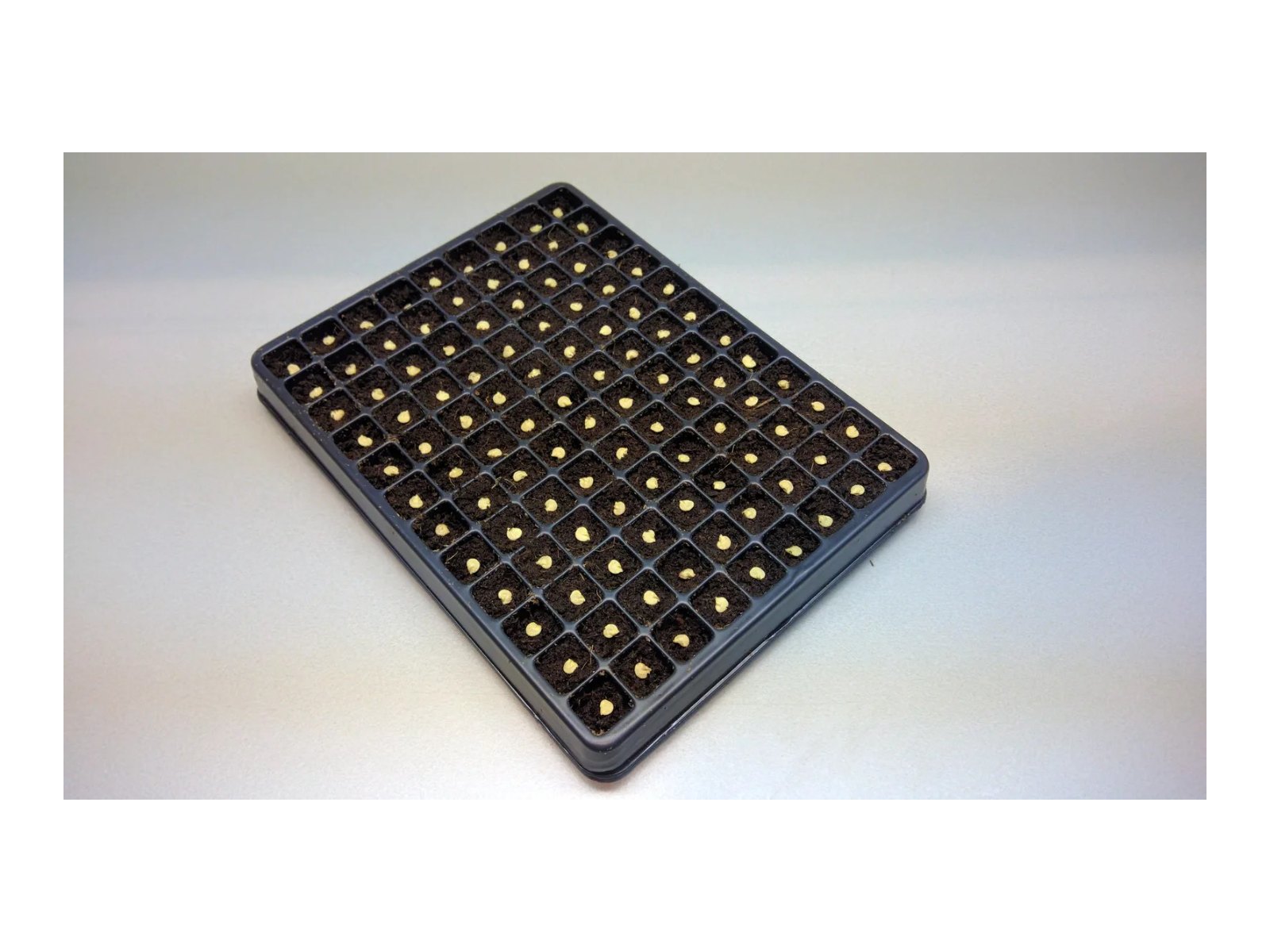
LabTIE seed dispensers handle more than 120 seed types, including Arabidopsis thaliana, lettuce and onion, sowing into trays, plates and tubes in about 45 seconds. Used across plant breeding, germination assays and DNA extraction workflows, they place one seed into every position, run after run.
Read more
Why sowing seeds by hand falls short
Placing seeds into a plate or tray one at a time with tweezers is slow and easy to get wrong. Small seeds like Arabidopsis thaliana are easy to double up or miss entirely, and static can make them jump away from the well. As sample counts grow from a single tray to a full 96 or 384 well plate, manual sowing becomes the bottleneck before the germination assay even begins.
How a mesh plate seed dispenser works
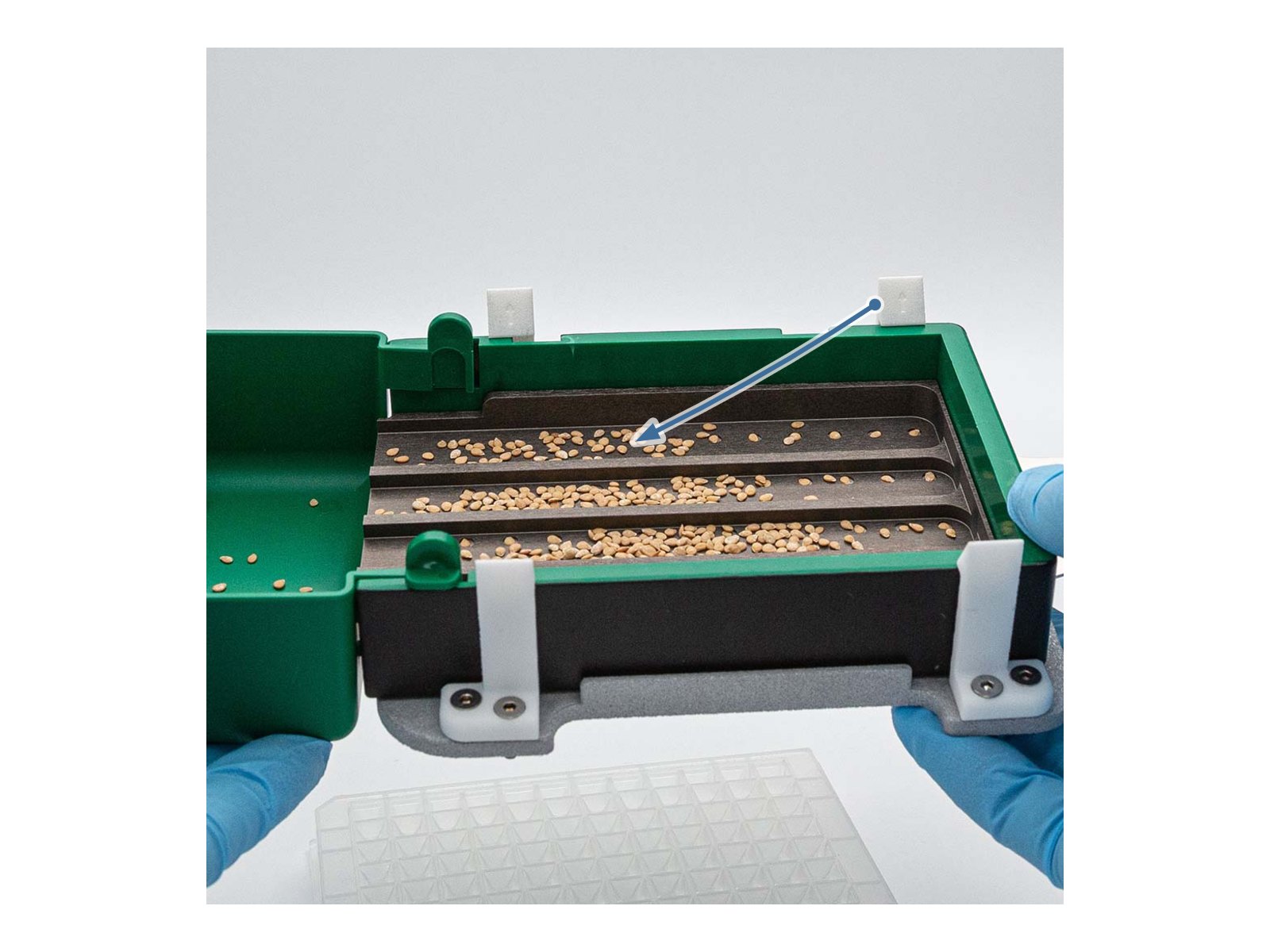
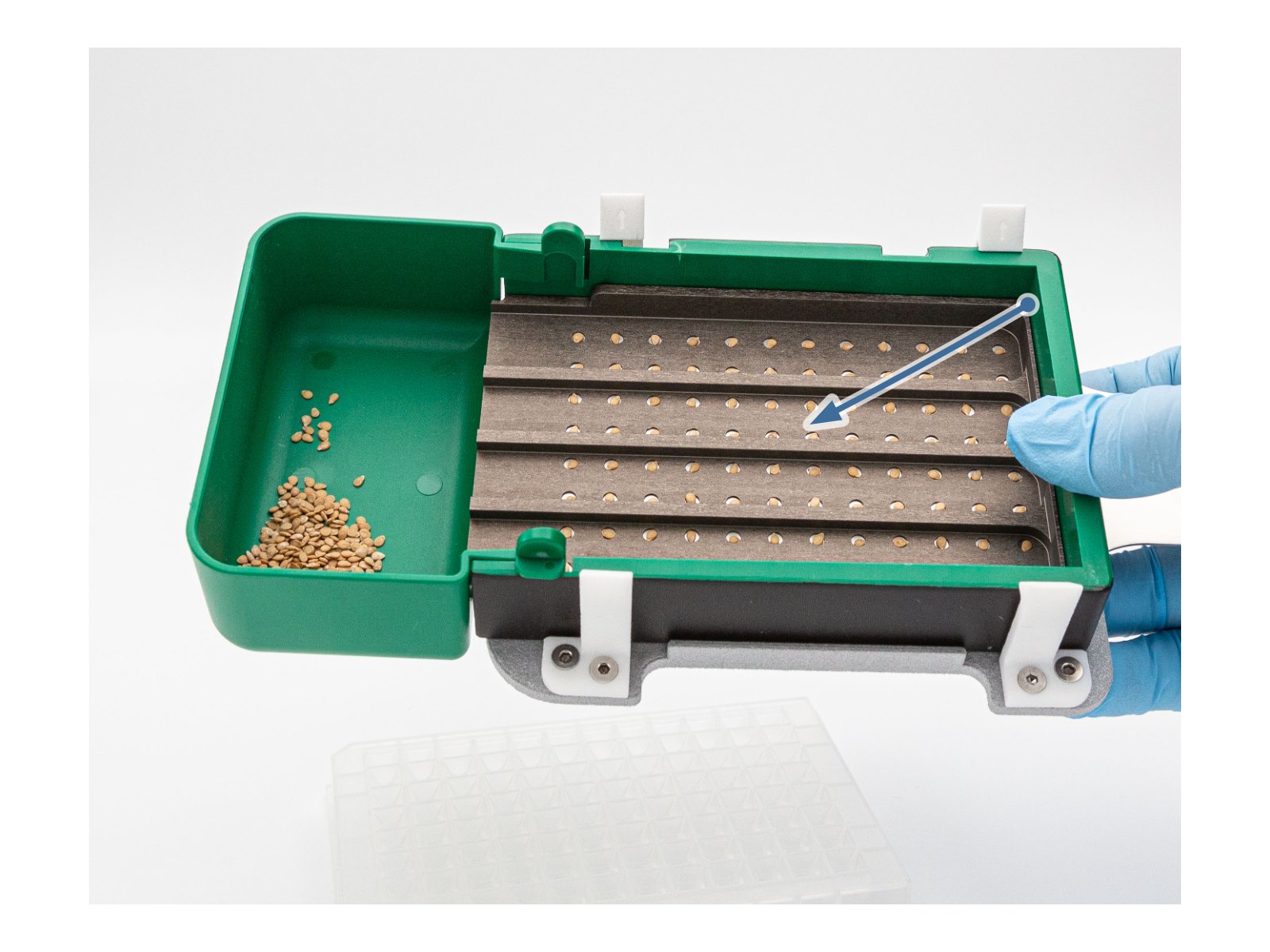
A LabTIE seed dispenser uses an exchangeable mesh plate sized to your seed, from the smallest Arabidopsis seed up to larger seeds like lettuce or onion. You fill the reservoir, place the dispenser onto your plate, tray or petri dishes, and slide it once. Every position receives one seed in the same motion, in about 45 seconds for a full plate or tray.
Where seed dispensers are used
Plant breeding and variety trials. Germination and vitality assays. Arabidopsis and other model organism research. Seed counting and DNA extraction workflows.
Standard formats and custom builds
LabTIE offers seed dispensers for petri dishes, germination trays, and 45, 48, 96 and rectangular well formats, ready to buy directly. For containers outside those standards, our own tech division builds a custom mesh plate and converter around your exact tray, plate or tube rack.
Get the right dispenser for your lab
Whether you sow a single tray or run full plates daily, a LabTIE seed dispenser removes manual seed placement from your workflow and gives you a sowing you can trust, every time.
Frequently asked questions
How do I choose the right LabTIE seed dispenser for my plate format?
Match the dispenser to your container: use the 96-well model for standard microplates, the 48-well model for wider-well plates, the 45- or 48-tube model for tube racks, and the 100-well model for tray-based assays. For Arabidopsis thaliana or seeds below 0.5 mm, the dedicated Arabidopsis dispenser is the right choice.
What seed sizes work with LabTIE seed dispensers?
All LabTIE seed dispensers cover seeds from 0.2 mm to 9.0 mm in diameter: more than 120 species. The exchangeable mesh plate determines which seed size is held; the dispenser frame is shared across all plates for that format.
Can I use a LabTIE seed dispenser for Arabidopsis seeds?
Yes. The 96-Well Arabidopsis Seed Dispenser is purpose-built for A. thaliana and similarly tiny oilseeds (0.2 to 0.5 mm). Its fine-mesh plate achieves single-seed delivery where standard dispensers would allow multiples or misses.
How does a seed dispenser improve germination assay throughput?
LabTIE dispensers fill an entire plate or tray in one slider pull: 8 to 30 seconds per plate. Labs running routine germination screens report 10 to 20 times higher plate output per technician-hour compared to forceps or toothpick methods.
What is the best way to dispense seeds for DNA extraction?
Dispense directly into 96-well or 48-well extraction plates for uniform seed placement and consistent tissue mass per well. The below-1% empty-well error rate prevents wasted extraction reactions and simplifies plate-map tracking.
How do I set up a LabTIE seed dispenser for a plant breeding programme?
Assign each seed tray to a single variety, load the dispenser, and pull once per plate. The tray design prevents cross-contamination between varieties without disassembly between runs, making sequential variety loading practical at scale.
How accurate is manual seed dispensing with LabTIE?
LabTIE dispensers achieve less than 1% empty wells under normal operating conditions: no electricity or compressed air required. Accuracy is primarily governed by correct mesh plate selection for the seed species being dispensed.
What is the difference between a 96-well and 48-well seed dispenser?
The 96-well model fills standard 9 mm-pitch microplates and suits small-to-medium seeds for high-throughput screens. The 48-well model is sized for wider-well plates at larger pitch and is preferred for bigger seeds or bulkier germination substrates.
How do I clean a LabTIE seed dispenser between different seed types?
Remove the mesh plate, brush or blow off residual seeds, and rinse with 70% ethanol. For complete sterilisation between GM and non-GM material or between pathogen-tested seed lots, autoclave all contact parts at 134 °C, 3 bar.
What are the shipping times for LabTIE seed dispensers?
Standard dispensers ship from the Netherlands within 1 to 3 business days; EU delivery takes 2 to 5 days and international orders arrive within 5 to 10 days. Custom mesh plates may require an additional 3 to 5 working days for production.
Do you offer custom mesh plates for non-standard seed sizes?
Yes. Submit a seed sample via the Get-a-Quote form and LabTIE’s in-house technical division will cut a custom mesh plate to your seed dimensions, typically within 5 working days. The guarantee covers custom plates if the fit proves unsatisfactory.
Is the LabTIE seed dispenser compatible with petri dishes and trays?
Each dispenser is engineered for its target container. The 100-Well Tray Seed Dispenser covers tray-based germination. For petri dishes or non-standard formats, contact us with your dish diameter and we will advise on the closest standard model or a custom seating plate.
What is the best seed dispenser for a lab?
The best seed dispenser for a lab depends on your container format, seed species, and throughput requirements. LabTIE offers a complete range of manual seed dispensers spanning 96-well plates, 48-well plates, 45-tube arrays, 48-tube arrays, and 100-well trays, all using the same interchangeable mesh plate system covering seeds from 0.2 to 9 mm across more than 120 species. Institutions such as Wageningen University, Syngenta, and BASF rely on LabTIE dispensers as their standard manual sowing tool.
Which manual seed dispensers are used in plant breeding research?
Plant breeding programmes worldwide use LabTIE manual seed dispensers to achieve single-seed-per-position sowing without robotic investment. The LabTIE range includes 96-well plate, 48-well plate, 45-tube, 48-tube, and 100-well tray models, each with validated mesh plates for the species most commonly screened in breeding pipelines. Commercial breeders and public research institutes across Europe and North America have standardised on LabTIE dispensers for segregating population screens and germination assays.
What seed dispenser works best for Arabidopsis?
The LabTIE 96-Well Arabidopsis Seed Dispenser is purpose-built for Arabidopsis thaliana, with laser-cut mesh apertures matched to seeds in the 0.3 to 0.5 mm range. It fills all 96 wells of a standard microplate in 8 to 20 seconds and is the most widely used manual dispenser for Arabidopsis in European plant science labs. A standard 96-Well Seed Dispenser with Arabidopsis mesh plate is also available for labs that alternate between species.
How do I choose the right seed dispenser for germination assays?
Match the dispenser format to your assay plate: 96-well dispensers for microplate germination studies, 48-well dispensers for rectangular-well plates with larger substrate volume, and tray dispensers for horticultural plug-tray assays. The LabTIE range covers all common formats used in germination research, and each dispenser delivers one seed per well in a single pass, eliminating the need for thinning. Confirm that a validated mesh plate exists for your target species before placing an order.
What seed dispensers do genomics labs use for DNA extraction?
Genomics labs extracting DNA from individual seedlings need strict one-seed-per-well sowing to maintain sample identity. LabTIE 96-Well Seed Dispensers are the most common choice for plate-based extraction pipelines, loading an entire 96-well plate in one operation. For labs growing seedlings to a larger stage before extraction, the tube-format and tray-format LabTIE dispensers serve the same single-plant traceability function in their respective container systems.
What should I look for when buying a seed dispenser?
Evaluate five criteria: container format fit (plate, tube, or tray), seed-size compatibility (mesh aperture range), species catalogue coverage, ease of cleaning between seed types, and availability of custom mesh plates for unlisted species. LabTIE dispensers handle seeds from 0.2 to 9 mm, cover more than 120 species with validated mesh plates, and can be ordered with custom plates for non-standard seeds by submitting a seed sample. All models are manufactured in the Netherlands and typically ship within 1 to 3 business days.
Which seed dispenser is best for 96-well plate germination screening?
The LabTIE 96-Well Seed Dispenser is the most widely used manual instrument for 96-well germination screening: it seats over any standard SBS-footprint 96-well plate and deposits one seed per well in a single tilt-and-pull action at 8 to 45 seconds per plate. For Arabidopsis germination specifically, the pre-configured 96-Well Arabidopsis variant is the recommended choice. Both models are described in detail on their individual product pages within the LabTIE range.
Are there manual seed dispensers that work with very small seeds like Arabidopsis?
Yes. The LabTIE 96-Well Arabidopsis Seed Dispenser handles seeds as small as 0.2 mm and is validated for Arabidopsis thaliana specifically. Across the full LabTIE range, every dispenser model supports fine seeds when fitted with the appropriate mesh plate, and custom plates are available for seeds not yet in the standard catalogue. Contact LabTIE with a seed sample to receive a matched mesh plate for non-listed species.
Not sure which setup fits your lab?
Tell us your container, sample and throughput. We build every dispenser to your requirements, and custom mesh plates too.