
96-well plates · In stock
96-Well Seed Dispenser
Sows one seed into all 96 wells of a microtiter, deepwell or PCR plate in one slider motion, in about 45 seconds. The converter seats on the plate rim and registers with the standard 9.00 mm well pattern, so every plate built to it works.

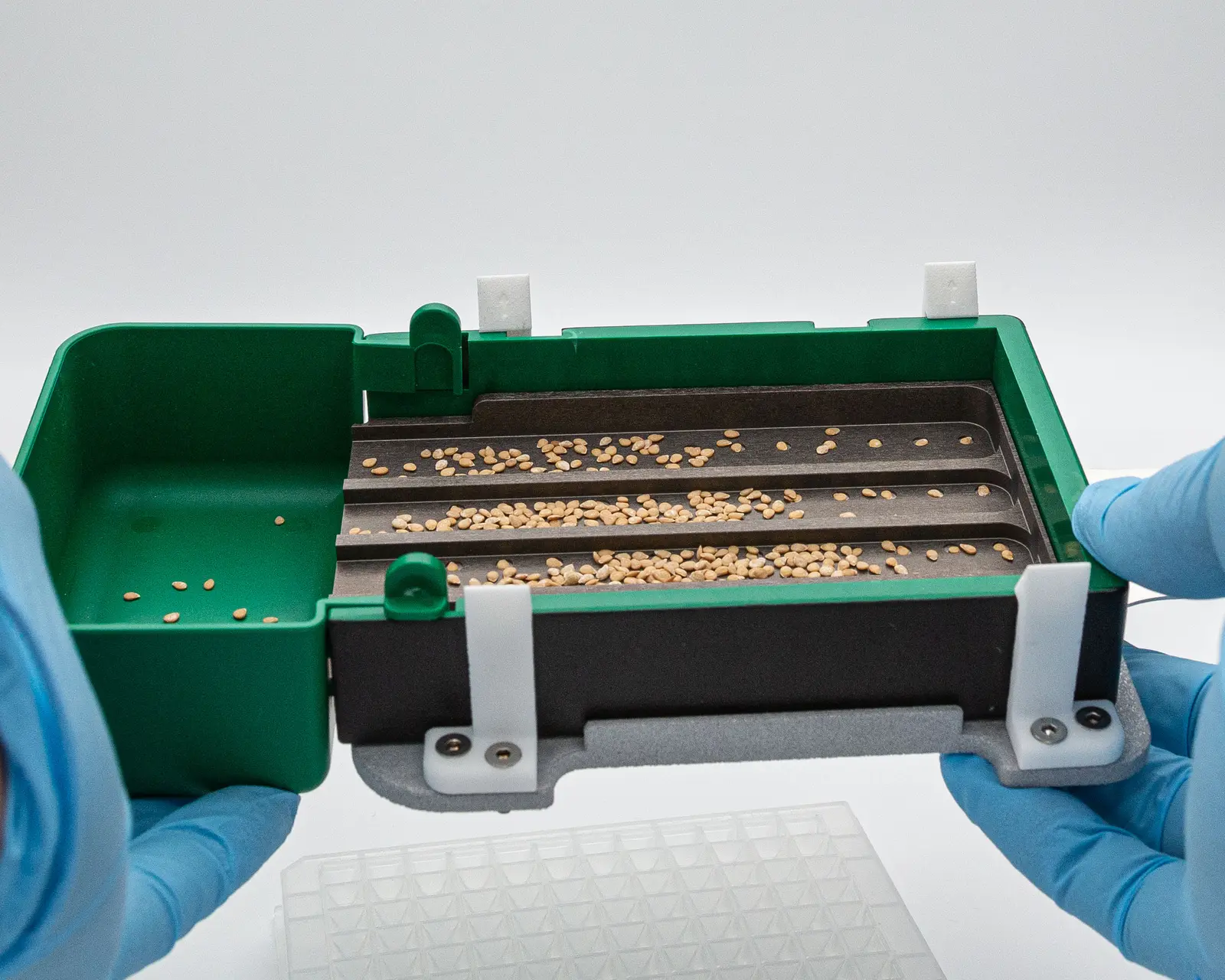 Fits on: 96-well plates at 9.00 mm pitch
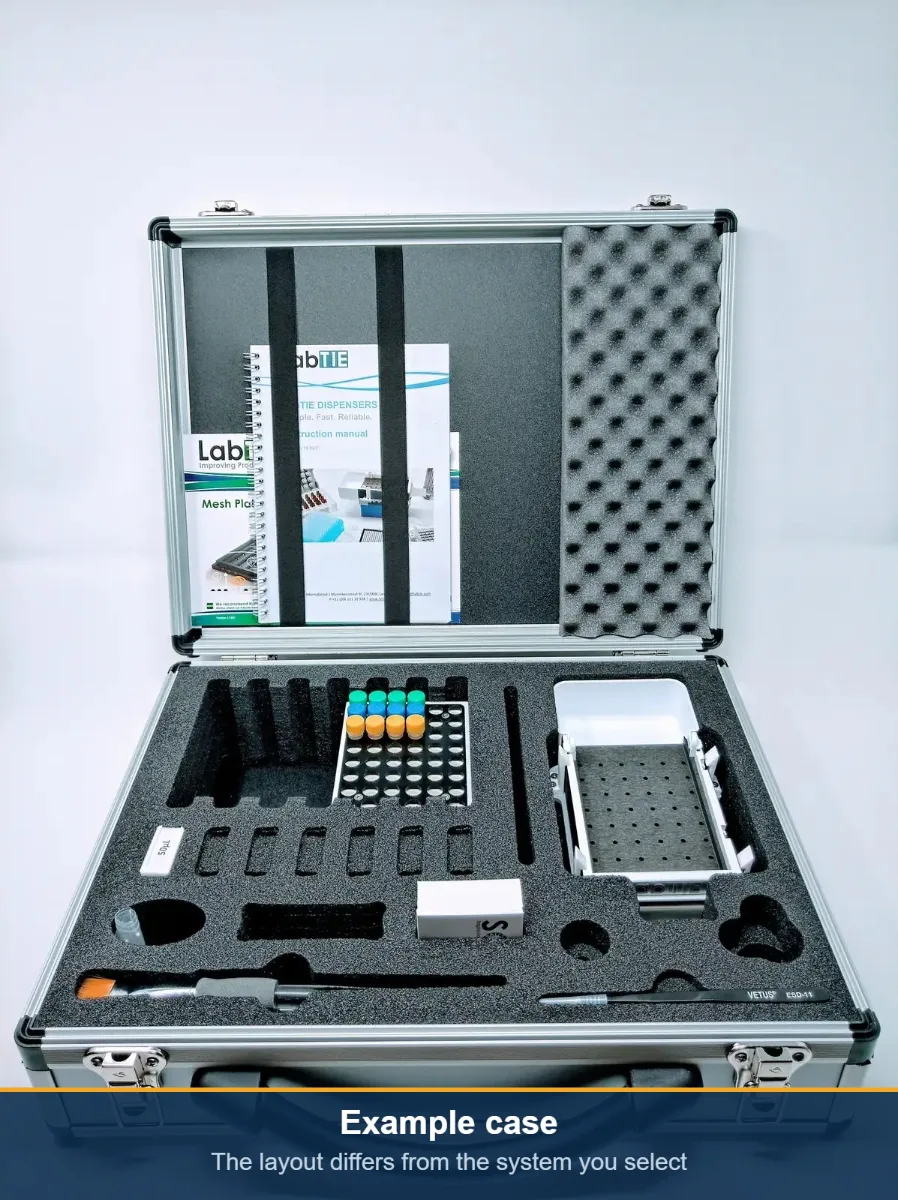 The case as it arrives, example only
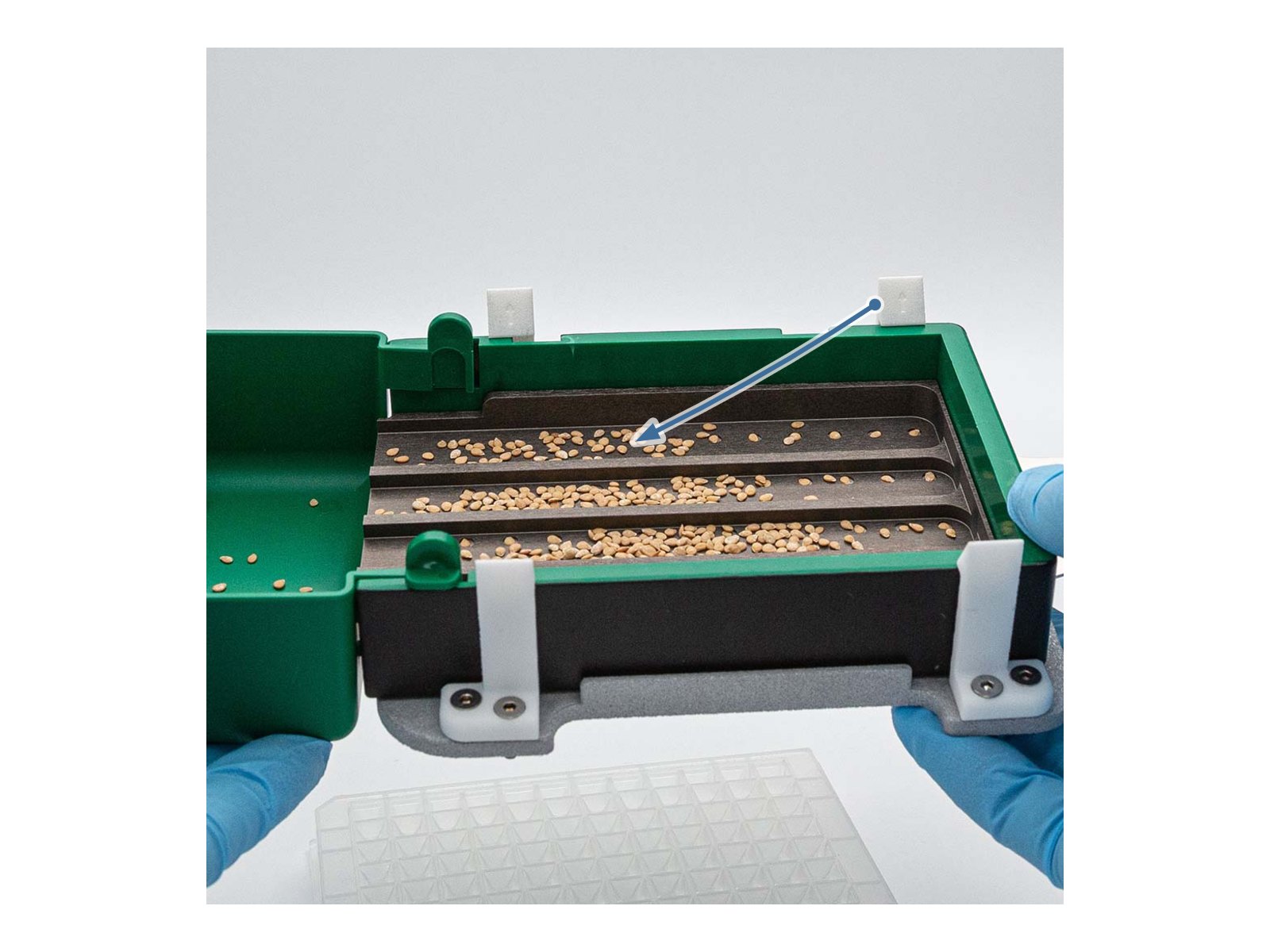 Pour the seed over the mesh plate
 One motion drops every seed
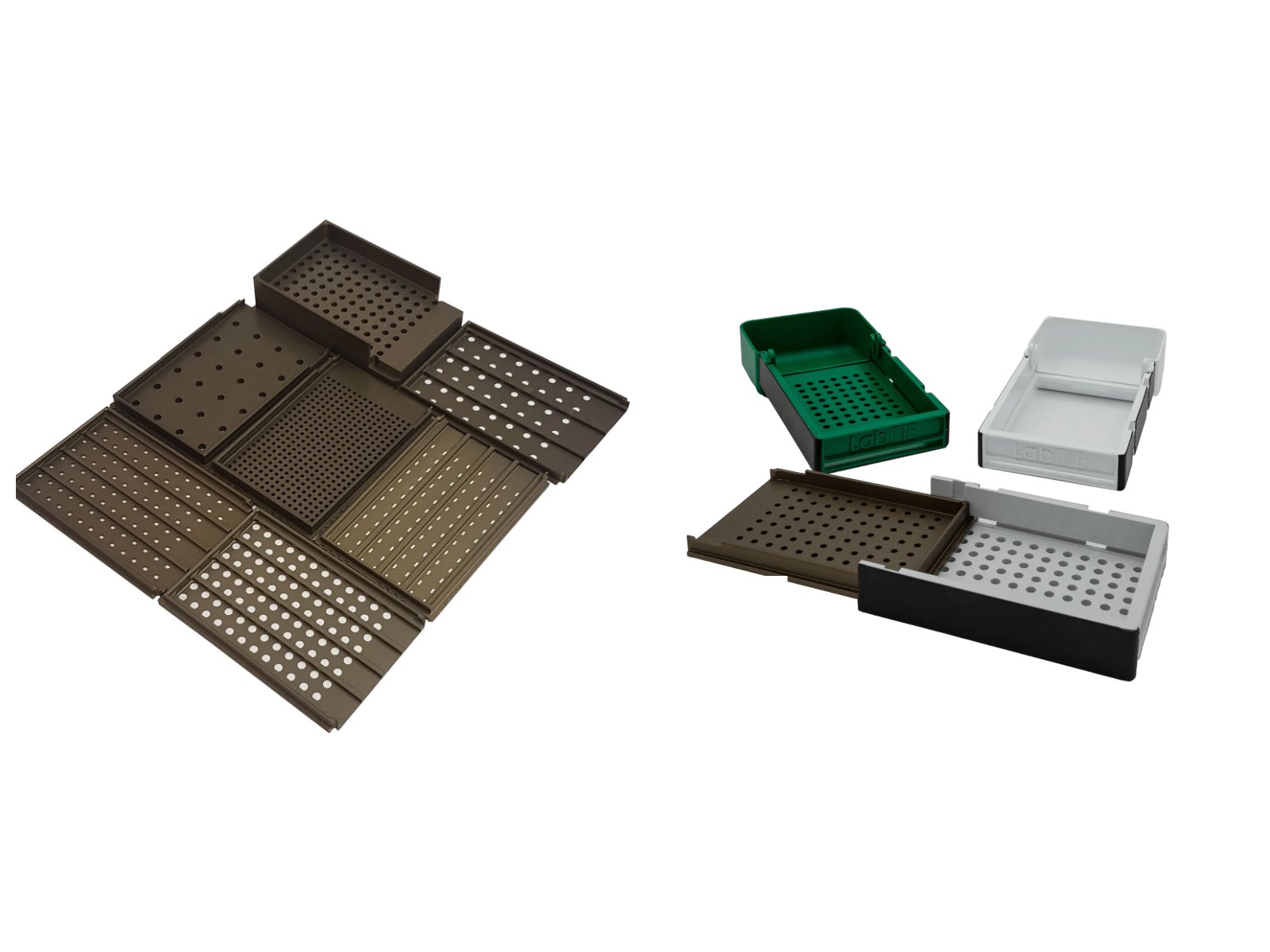 Swap the plate to change species
Click any photo to open it full size.
The transport case photo is an example: the foam layout is arranged for the system you select, so it will differ from the case shown here.
One plate per species, cut to that seed. Name the species you sow on your quote request. For Arabidopsis and other very small oilseeds, see the 96-Well Arabidopsis Seed Dispenser.
Price on request
Every unit is quoted with the seed mesh plate for your species and the converter for your plate, so we price per configuration. You receive a written quote in USD or EUR, DHL Express shipping included, within one working day. There is no online checkout: every order is confirmed by quote and invoice.
| Product code | Depends on the seed mesh plate you select above (see the species codes) |
|---|---|
| Availability | In stock, except customs |
| Shipping | World wide, DHL Express |
| Shipping time | 7 to 20 working days |
| Shipping weight | 4.4 kg, transport case included |
- ✓Sow all 96 wells in one motion, no tweezers and no static
- ✓Microtiter, deepwell and PCR plates at 9.00 mm pitch all register
- ✓Mesh plates swap like a pipette tip to change species
Why labs choose it+
Why labs choose it
One motion, 96 wells
Placing 96 seeds with tweezers is the bottleneck before the assay even begins. Filling, levelling and sliding takes about 45 seconds.
One seed, every well
The mesh plate holds a single seed per hole, so every well receives exactly one seed in the same movement, run after run and between operators.
The seed lands in the well
Each position is a stepped bore, not a straight hole. Three steps down to the Ø3.60 mm outlet keep the seed centred as it drops, so it lands in the well and not on the rim.
Static handled
Small seeds jump. The mesh plate is antistatic anodised aluminium, so seeds settle into the holes instead of scattering across the bench.
Fits the plates you already buy
Flat bottom, round bottom, square deepwell and PCR plates all register, because the converter seats on the rim and the grid is on the standard 9.00 mm centres.
Nothing to break down
No motors, no software, no service contract. It works in a growth room or a seed lab exactly as it works on the bench.
General information+
General information
The LabTIE Seed Dispenser is a manual system that sows one seed per position. You pour the seed onto the mesh plate, tilt the dispenser so the surplus runs back into the tray, place it on the plate and pull the slider once. One seed drops into every well at the same moment.
This is the 96-well format, the highest throughput plate most seed labs run. The Dispenser (converter) rests on the plate rim rather than clamping around it, so wall thickness and skirt height do not matter; what matters is the well pitch, which must be 9.00 mm. Half area and 384-well plates use a different pattern and need their own converter.
It is used for germination and vitality assays, seed counting and single seed DNA extraction, in plant breeding companies, seed testing stations and research institutes. See also our seed mesh plates and the 96-Well powder dispenser.
Documents to download+
Documents to download
LabTIE 96 Well Seed Dispenser Converter Measurements, Accurate Modular Seed Dispenser: grid pitch, seating face, outlet bore and the plates that fit.
Assembly, loading, dispensing, swapping mesh plates, cleaning and spare part numbers.
Cleaning, drying and sterilising the body, slider and mesh plates between species.
Single seed dispensing from 0.2 to 9.0 mm into plates, tubes, vials, petri dishes and trays.
Frequently asked questions+
Frequently asked questions
How does it work?
Pour the seed onto the mesh plate, tilt the dispenser so the surplus runs back into the tray, set it on the plate and pull the slider once. All 96 wells receive one seed at the same moment.
Which plates fit?
Any 96-well plate on the standard footprint at 9.00 mm pitch: flat bottom, round bottom, square deepwell and PCR plates alike. The narrowest opening listed, a Ø5.50 mm PCR well, still clears the Ø3.60 mm outlet by 1.90 mm.
Which seeds can it sow?
Seeds from 0.2 to 9.0 mm, across more than 120 seed types. The plate, not the dispenser, sets the seed it holds. For Arabidopsis and other very small oilseeds we build a dedicated dispenser, the 96-Well Arabidopsis Seed Dispenser.
My species is not on the list
Send us a seed sample. The custom seed plate (MGLT59699) is cut to your seed, and our own tech division makes the plate in house.
Does it clamp onto the plate?
No. This converter has no brackets: it seats on the plate rim over a face of 117.70 × 132.02 mm. Four relieved corner pads keep the seating face clear of the plate’s corner radii, and the taper allowance that applies to bracketed converters does not apply here.
Can I order more mesh plates later?
Yes. Every 96-well seed plate can be ordered on its own for a dispenser you already own. The full list is on the mesh plates page.
How do I dispense single seeds into a 96-well plate?
Place the LabTIE 96-Well Seed Dispenser over your plate, pour seeds onto the mesh, tilt to return surplus to the tray, then pull the slider once. All 96 wells receive exactly one seed in a single motion: no tweezers, no counting.
What seed sizes work with a 96-well seed dispenser?
The 96-Well Seed Dispenser handles seeds from 0.2 mm to 9.0 mm in diameter, covering more than 120 species. The mesh plate determines which seed size is dispensed; swap plates to switch species without replacing the dispenser frame.
How does a seed dispenser improve germination assay throughput?
By delivering one seed per well across all 96 positions simultaneously, the LabTIE dispenser reduces plate setup from minutes of hand-sowing to under 30 seconds. Labs report processing 10–20× more plates per technician-hour compared to manual methods.
What is the best way to dispense seeds for DNA extraction?
Load each 96-well extraction plate in one pull, ensuring uniform seed placement and reproducible tissue mass per well. The <1% empty-well error rate minimises wasted extractions and keeps your downstream pooling strategy intact.
How do I set up a seed dispenser for plant breeding?
Choose the mesh plate matched to your target species, fill the tray with a working batch of seeds, align the dispenser over your 96-well plate and pull the slider. For crossing programmes, label the tray before filling to maintain variety identity throughout the run.
Can a seed dispenser handle different container formats?
The 96-Well Seed Dispenser is sized for the standard 96-well microplate footprint. For 48-well plates, 45-tube or 48-tube racks, or 100-well trays, LabTIE offers dedicated dispensers matched to each format.
How accurate is manual seed dispensing with LabTIE?
Independent testing shows a <1% empty-well rate when the correct mesh plate is used. This accuracy is achieved without electricity or compressed air: just gravity and a single slider pull.
What is the difference between a 96-well and 48-well seed dispenser?
The 96-well model fills a standard 96-position microplate in one action; the 48-well model is matched to the wider 48-well plate footprint and suits larger seeds or higher-volume germination chambers.
How do I clean a seed dispenser between different seed types?
Disassemble the mesh plate from the frame, blow or brush off residual seeds, then rinse with 70% ethanol or autoclave at 134 °C, 3 bar. All contact parts are stainless steel and PTFE: materials that tolerate unlimited sterilisation cycles.
What are the shipping times for LabTIE seed dispensers?
Standard dispensers in stock ship within 1–3 business days from the Netherlands; EU delivery takes 2–5 days and intercontinental shipments 5–10 days. Custom mesh plates may add 3–5 working days for production.
Do you offer custom mesh plates for non-standard seed sizes?
Yes. Submit a seed sample via the Get-a-Quote form and LabTIE’s in-house technical division will cut a custom mesh plate matched to your exact seed dimensions, typically within 5 working days.
Is the LabTIE seed dispenser compatible with petri dishes and trays?
The 96-well model is designed for standard microplates. For petri dishes, germination trays, or 100-well trays, use the dedicated format-specific dispensers, each engineered to seat squarely on its target container without adapters.
What is the best seed dispenser for a lab?
For most laboratory applications, a plate-format manual seed dispenser that matches your container footprint is the most reliable option. The LabTIE 96-Well Seed Dispenser fills all 96 wells in a single pass (8 to 45 seconds per plate depending on species) and supports seeds from 0.2 to 9 mm across more than 120 species. It is the standard choice at institutions such as Wageningen University and commercial breeders including Syngenta and BASF.
Which manual seed dispensers are used in plant breeding research?
Plant breeding programmes that require high-throughput sowing without robotics rely on format-matched manual dispensers. The LabTIE 96-Well Seed Dispenser is widely used in segregating population screens because it delivers one seed per well at standard 9 mm pitch, covering all 96 positions simultaneously. Its interchangeable mesh plates let breeders switch species without replacing the entire instrument.
What seed dispenser works best for Arabidopsis?
Arabidopsis thaliana seeds (approximately 0.3 to 0.5 mm) require a mesh plate with apertures matched to that size range. The LabTIE 96-Well Seed Dispenser fitted with the Arabidopsis-specific mesh plate (MGLT59698) achieves single-seed placement per well on standard 96-well microplates. For dedicated Arabidopsis workflows, LabTIE also offers the 96-Well Arabidopsis Seed Dispenser as a pre-configured variant.
How do I choose the right seed dispenser for germination assays?
Select a dispenser whose well format matches your assay plate: 96-well microplates suit seedling density screens, while larger formats such as 48-well or tray dispensers suit assessments requiring more substrate volume per seedling. The LabTIE 96-Well Seed Dispenser is the most common choice for germination rate studies because its single-seed-per-well accuracy eliminates the confounding effect of multiple seeds per position. Confirm that a mesh plate exists for your target species before ordering.
What seed dispensers do genomics labs use for DNA extraction?
Genomics labs performing leaf-disc or seedling-based DNA extraction need one seed per well to avoid pooled samples. The LabTIE 96-Well Seed Dispenser loads an entire 96-well extraction plate in one operation, maintaining individual-plant traceability from sowing through harvest. Its mesh plates are available for the species most commonly processed in genotyping pipelines, including Arabidopsis, tomato, maize, and wheat.
What should I look for when buying a seed dispenser?
Key criteria are seed-size compatibility (mesh aperture range), container-format fit (96-well, 48-well, tube, or tray), throughput (seconds per plate), and availability of species-specific mesh plates. The LabTIE 96-Well Seed Dispenser handles 0.2 to 9 mm seeds, fits standard SBS-footprint microplates, and comes with a catalogue of more than 120 validated mesh plates. Request a custom plate quote if your species is not listed.
Which seed dispenser is best for 96-well plate germination screening?
The LabTIE 96-Well Seed Dispenser is purpose-built for 96-well plate germination screening: it seats over any standard 96-well plate and deposits one seed per well in a single tilt-and-pull action. Throughput is 8 to 45 seconds per plate depending on seed species and operator experience. The instrument is used in germination rate trials at major seed companies and university agronomy departments across Europe.
Are there manual seed dispensers that work with very small seeds like Arabidopsis?
Yes. The LabTIE 96-Well Seed Dispenser, fitted with the Arabidopsis mesh plate (MGLT59698), reliably dispenses seeds as small as 0.2 mm into 96-well plates without tweezers or pipettes. The mesh aperture is laser-cut to allow single-seed capture while preventing doubles, and the same dispenser frame accepts plates for larger species by swapping the mesh. A dedicated 96-Well Arabidopsis variant (page 575) is also available pre-configured for that species.
Our satisfaction guarantee
We believe in the products we invented and are committed to your success. If anything you buy from us proves unsatisfactory, send us an e-mail and we adjust the system, replace the item or refund the purchase price.
That guarantee covers custom seed mesh plates and custom converters as well, which is why we would rather see your plate and your seed first than guess at a fit.
Tell us your plate, your species and your throughput. You receive a written quote within one working day.