
A tissue homogenizer turns a piece of tissue into a lysate you can extract from, and choosing one is a trade between tissue type, speed, hands on time and what happens to your RNA. Three open access papers compared methods on real tissue, from mouse eyes to human skin and tumour biopsies. None of them found a method that wins everywhere. That is useful, because it shows which questions to settle before you buy one. Below: what the papers measured, what they left out, and how to test a method on your own samples.
Three families of tissue homogenizer
The papers below test three kinds of tool. A mortar and pestle grinds frozen tissue by hand, usually in liquid nitrogen. A rotor stator homogenizer spins a probe in the lysis buffer until the tissue is gone. A bead based machine shakes the tissue in a closed tube with grinding beads or a steel ball. A cryogenic ball mill is the bead idea in a steel jar, and a Dounce is a glass tube with a hand driven pestle.
Tumour tissue: the rotor stator gave the highest RNA concentration
Ostapowicz and colleagues took tumour tissue from the oral cavity of four head and neck cancer patients, matched healthy tissue from the same patients, and breast skin from five patients. They compared a mortar and pestle in liquid nitrogen, a cryogenic ball mill and a rotor stator homogenizer, all followed by the same RNA kit. Grinding took about 5 to 10 minutes with the mortar, 2 to 5 minutes with the ball mill (1 minute at 30 Hz per cycle) and about 3 minutes with the rotor stator (Ostapowicz et al., 2025).
With all tissues pooled, the rotor stator gave the highest RNA concentration (p = 0.02) and the best 260/230 ratio (p = 0.02), while the mortar gave the best 260/280 ratio (p = 0.01). The median RIN tended to be highest for the rotor stator, but the authors give no p value for that. The mortar and the ball mill did not differ in concentration, purity or RIN (Ostapowicz et al., 2025).
The detail that matters for a buyer: inside each single tissue type, no method differed significantly in purity or RIN. The rotor stator advantage shows up in the pooled data, from small groups of patients. The authors name the small sample size as a limit, note that the ball mill needs special equipment and an experienced operator, and that the rotor stator needs no liquid nitrogen. Breast skin gave low RIN values with every method. They did not test bead beating (Ostapowicz et al., 2025).
Mouse eye: bead methods were faster, but not always higher
Gooding and colleagues compared five ways to lyse mouse eyes and retinas: a glass Dounce, a plastic pellet pestle, a bead mill with one 4.7 mm steel ball per tube at 50 Hz, a bead blender with 0.9 to 2.0 mm steel beads, and a stainless steel set screw shaken on a vortex mixer.
For the whole eye, the total RNA yield was 9784 ng with the steel ball, 8347 ng with the small beads, 7724 ng with the set screw, 4584 ng with the Dounce and 2982 ng with the pestle, with 10 eyes per method. The authors say the three bead based methods outperformed the pestle and the Dounce on whole eye yield. Whole eye RIN ran from 8.18 to 8.78 with no significant differences (Gooding et al., 2018).
The retina told a different story. It is small and soft, and the Dounce gave 7380 ng, close to the 8345 ng of the steel ball and above the other two bead methods (8 retinas per method). Tissue size and toughness change the ranking (Gooding et al., 2018).
The time difference was clear. Ten whole eyes took about 15 minutes with each of the bead based methods and 45 to 60 minutes with the pestle or the Dounce. The authors also say bead based methods carry less potential for sample contamination than the hand tools (Gooding et al., 2018).
Skin biopsies: when the beads did not finish the job
Reimann and colleagues worked on skin, which is hard to open. They tried a bead motion instrument with ceramic or metal beads and a rotor stator type dissociator on pig and human skin biopsies. The bead instrument did not fully homogenize the biopsies: the solution was cloudy after five cycles and intact tissue remained. The dissociator fully homogenized every human sample after one cycle, but only 8 of 18 pig samples (44.4 percent) after two cycles. RNA quality and quantity did not differ significantly between the two instruments in the human samples (Reimann et al., 2019).
Their best result came from the lysis buffer, not the machine. Collecting, storing and homogenizing the sample in a lysis buffer for fibrous tissue with beta mercaptoethanol gave the best strategy for human skin. The authors say homogenization was incomplete in most cases, which probably meant incomplete lysis (Reimann et al., 2019).
What the three papers agree on
Put side by side, the studies point to a short list of questions to answer before you choose a tissue homogenizer:
- How tough and how large is the tissue? Soft, small tissue such as a retina was lysed well by a hand driven Dounce, while whole eyes and skin needed more force (Gooding et al., 2018; Reimann et al., 2019).
- How many samples per day? Hand tools took 45 to 60 minutes for ten whole eyes, bead based methods about 15 (Gooding et al., 2018).
- Which number decides? Concentration, 260/280, 260/230 and RIN did not all pick the same winner (Ostapowicz et al., 2025).
- Who runs it? A cryogenic ball mill needs special equipment and an experienced operator, and a mortar needs liquid nitrogen. A rotor stator needs neither (Ostapowicz et al., 2025), but its probe has to be cleaned between samples.
- Is the tissue really gone? Look at the lysate. Cloudy liquid with pieces left means incomplete lysis, whatever the settings say (Reimann et al., 2019).
A half day test on your own tissue
The papers use different tissues, kits and settings, so their numbers show a direction, not a target. Take one tissue sample and cut it into equal pieces by weight, as Ostapowicz and colleagues did. Run each candidate method on one piece, use the same lysis buffer volume and the same extraction kit, and note the minutes per sample. Then measure concentration, 260/280, 260/230 and RIN. Repeat on three pieces per method. If the differences are smaller than the spread between pieces, pick the faster method or the one easier to keep clean.
Where bead loading fits
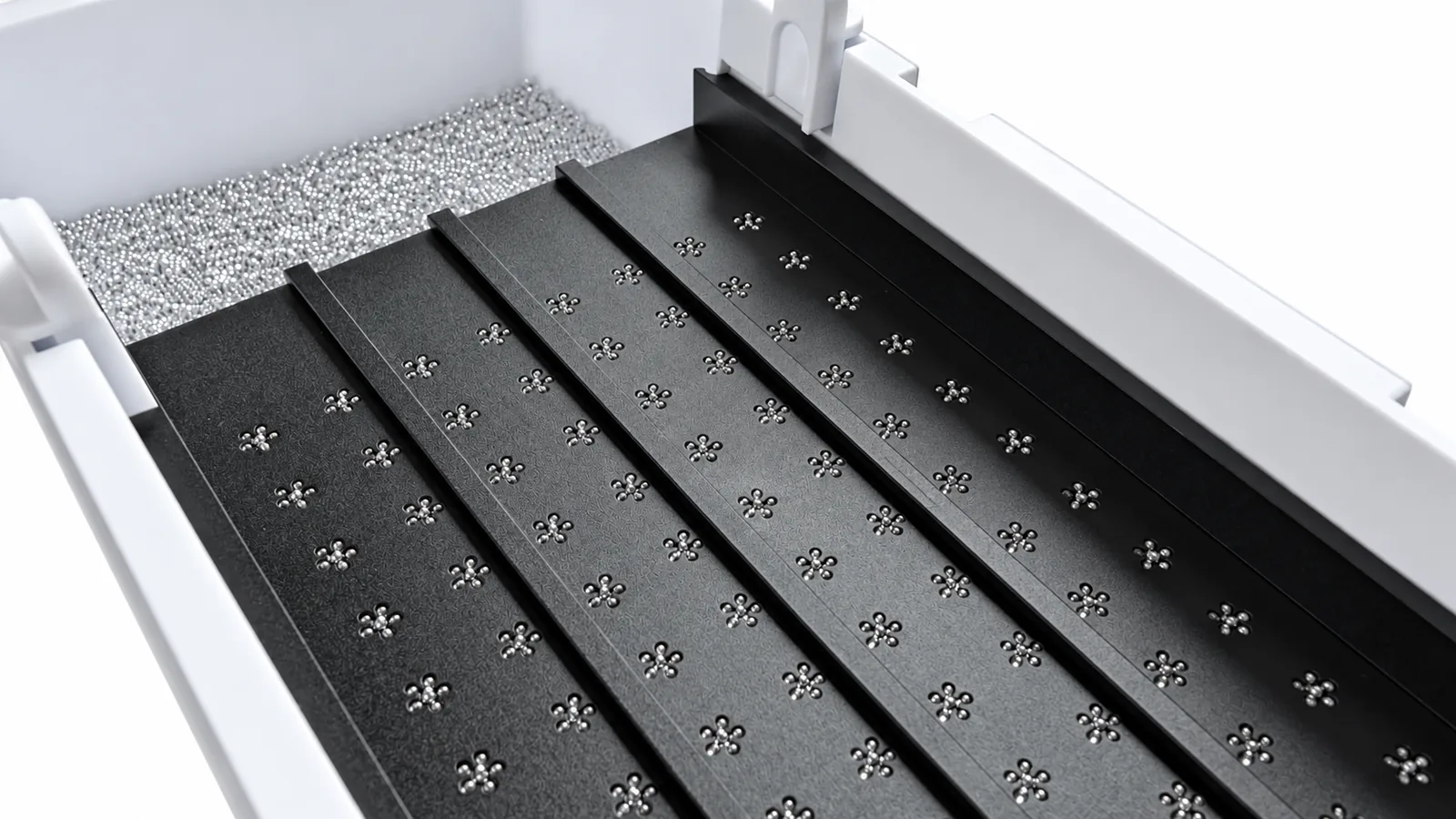
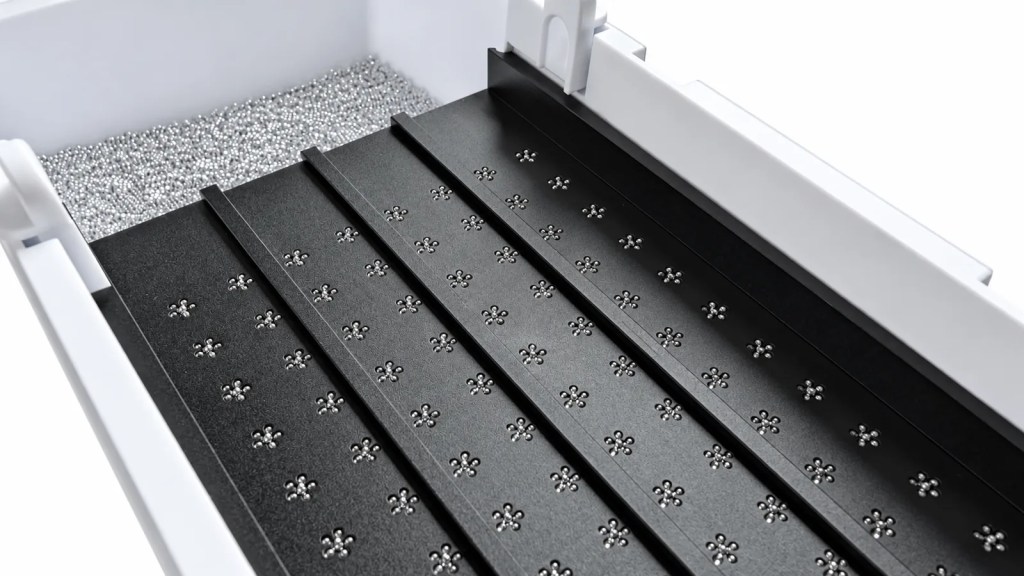
If bead based homogenization wins your test, the beads have to be in every tube or well before the run. Scooping by hand is slow and uneven. The 96-Well Bead Dispenser drops beads into all 96 wells of a plate in about 8 seconds, and the 48 Tube Bead Dispenser does the same for screw cap or snap cap tubes. Both use exchangeable mesh plates, and the full range is on the bead dispensers page. The machines that shake the tubes are on the bead beaters page. Published bead counts are covered in tissue homogenizer beads: how many per tube or well, and the wider picture of lysis methods in what is cell lysis.
What this does not cover
None of the three papers tests every method on one tissue. Two used small groups and one used animal tissue. A bead dispenser does not homogenize anything: it puts the same number of beads in each tube so the bead step is the same for every sample. And as the skin study shows, beads are not the answer for every tissue.
Limits of this summary
We read the article pages, not the supplementary files. For the skin paper, part of the page was read from a machine made summary and not verbatim, and its full author list was not visible to us, so we cite it with et al.
Sources
- Ostapowicz J, Maćkowiak B, Ostrowska K, et al. Impact of soft tissue homogenization methods on RNA quality. Molecular Biology Reports. 2025;52:425. https://doi.org/10.1007/s11033-025-10508-0
- Gooding SW, Chrenek MA, Ferdous S, Nickerson JM, Boatright JH. Set screw homogenization of murine ocular tissue, including the whole eye. Molecular Vision. 2018;24:690 to 699. PMID 30405307. https://pmc.ncbi.nlm.nih.gov/articles/PMC6202007 (we could not confirm a DOI for this article)
- Reimann E, Abram K, Kõks S, Kingo K, et al. Identification of an optimal method for extracting RNA from human skin biopsy, using domestic pig as a model system. Scientific Reports. 2019;9:20111. https://doi.org/10.1038/s41598-019-56579-5
Written by Bas Millenaar, LabTIE International B.V., labtie.com. LabTIE builds manual seed, bead and powder dispensers for 96 well plates, 384 well plates, tubes and vials.
Leave a Reply