
The first time a breeding lab swaps hand-loading for a dispenser, the reaction is always about speed. Twenty-five minutes of spatula work becomes about forty-five seconds. That is the part people tell their colleagues about. It is not the part that matters most a year later.
What follows is what actually shows up once the novelty wears off.
Bead size is almost always the first thing people get wrong
New users tend to default to whatever bead size came with their kit. That works fine for soft plant tissue like young leaf material. But when the same lab starts processing woody stems, root tissue, or seeds with hard seed coats, those same beads underperform. The tissue does not fully disrupt, DNA yields drop, and people blame the dispenser or the kit instead of revisiting bead selection.
Plant breeding labs running large-scale genotyping screens often work with dozens of different crop varieties in a single week. Leaf tissue from one species behaves completely differently from another. The labs that consistently get clean extractions have usually built up a simple reference guide for their most common tissue types: which bead diameter, which fill volume, and which homogenization settings work reliably for each.

The bottleneck shifts, but it does not disappear
When bead loading goes from manual to automated, processing time for a single plate drops from 15 to 20 minutes of hands-on work down to under two. That sounds like a clean win. And it is. But what happens next is that the rest of the workflow becomes the constraint. Lysis buffer addition, centrifuge cycles, cleanup steps, and PCR setup are all still manual. The dispenser does not fix those.
What it does do is make the bead-loading step so fast and reliable that teams start batch-processing more plates per session. Instead of one or two plates, they run four or six. That is when labs realise their centrifuge capacity is the actual bottleneck, not the bead loading. It is a good problem to have, but it does require rethinking the whole workflow.
The labs that adapt well plan the whole process end to end. They stagger plate starts, schedule centrifuge runs in parallel, and map out where each step happens before scaling up. The dispenser is a catalyst for that kind of workflow thinking.
Consistency across wells matters more than absolute speed
In high-throughput genotyping, a failed extraction in well A5 does not just mean one missing data point. It means re-running that sample, often with a fresh tissue sample, which may or may not be available. When you are processing thousands of accessions in a breeding programme, failures add up fast.
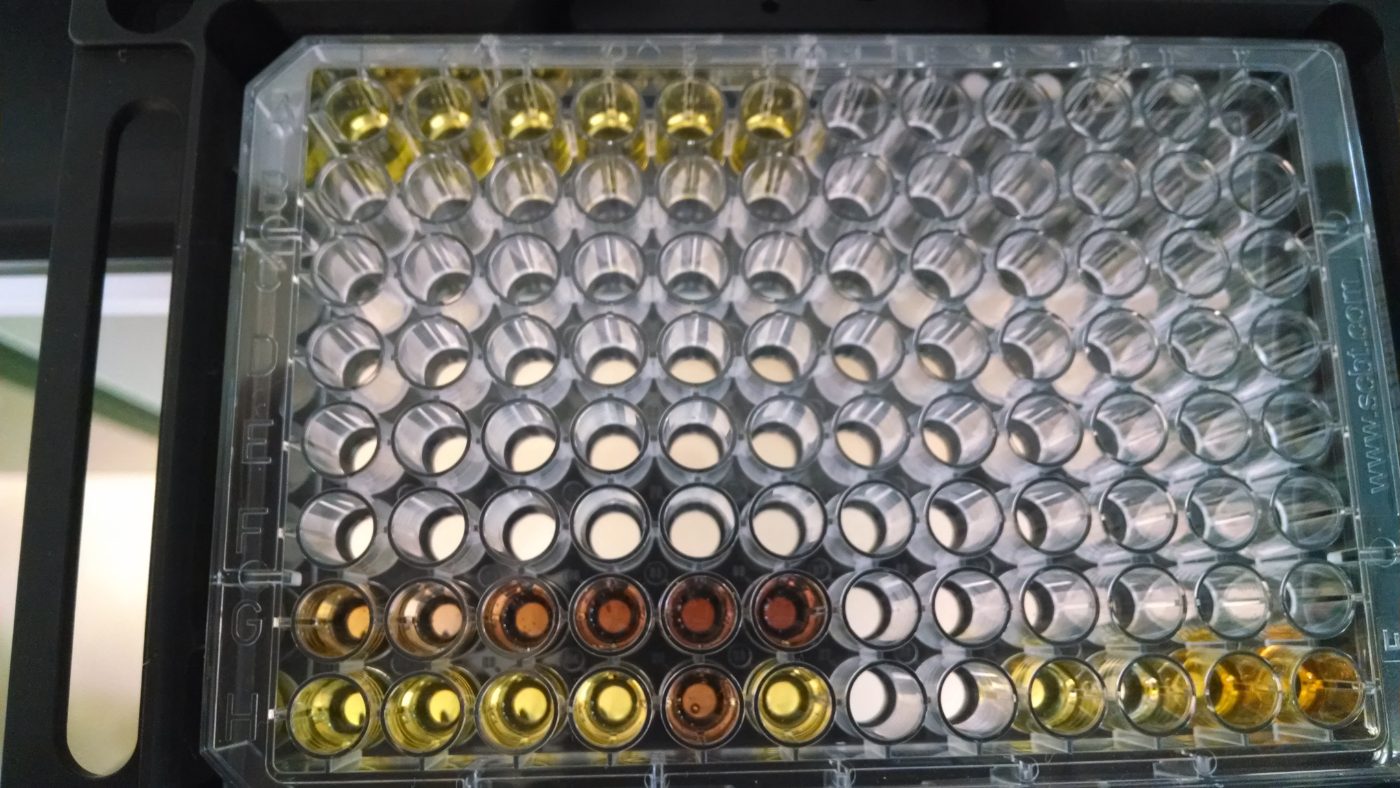
Hand loading varies, and it varies more as the day goes on. Someone filling 96 wells one by one will put two beads in a well around mid-plate, or skip one entirely near the end. Nobody notices at the time.
A dispenser removes that variable rather than reducing it. The mesh plate has one hole per position, so every well gets the same bead count by construction. Your remaining failures then have a cause worth investigating, which is the real gain.
Cross-contamination is a real concern, and mesh plate choice matters
One thing that often comes up after the first few months of use: residual beads in the dispenser mechanism. When labs switch between bead sizes or bead types mid-session, beads from the previous run can carry over into the next plate. For most applications that is a minor inconvenience. For labs running strict GMO detection work or working with rare accessions, it is a serious problem.
The solution is straightforward once you know it: dedicated mesh plates for each bead type, and a cleaning cycle between switches. Labs that document their cleaning protocol and make it part of their standard operating procedure avoid this entirely. Those that do not find out about it the hard way.
Training new people takes minutes, not days
In plant breeding groups where seasonal work brings in large numbers of temporary staff, manual bead loading creates a training challenge. Teaching someone to load beads accurately and consistently into 96 wells takes time, and the results vary by person. With a dispenser, a new technician can be running plates correctly within a single session. The process is standardised, the outcome is predictable, and lab managers stop worrying about who is doing the loading.
That matters more than it sounds when a lab is processing thousands of samples during a busy growing season and staff turnover is high.
The long-term view
After years of use, the labs that get the most out of a bead dispenser are the ones that treat it as part of a broader workflow rather than a standalone solution. They keep records of what works for each tissue type. They review their mesh plates regularly. They plan their plate processing around their centrifuge and downstream equipment. And when something changes, like a new crop species or a new extraction kit, they take the time to re-validate their setup rather than assuming the old parameters still apply.
None of that is complicated. But it does require a bit of discipline and the willingness to think systematically about a process that is easy to treat as routine.
If you are wondering how a LabTIE bead dispenser would fit into your current extraction workflow, we are happy to chat through the specifics with you.
The plate formats mentioned here have their own pages: the 96-Well Starter Bead Dispenser for a single 96-well plate, and the 384-Well Bead Dispenser for 384-well work.
Leave a Reply