
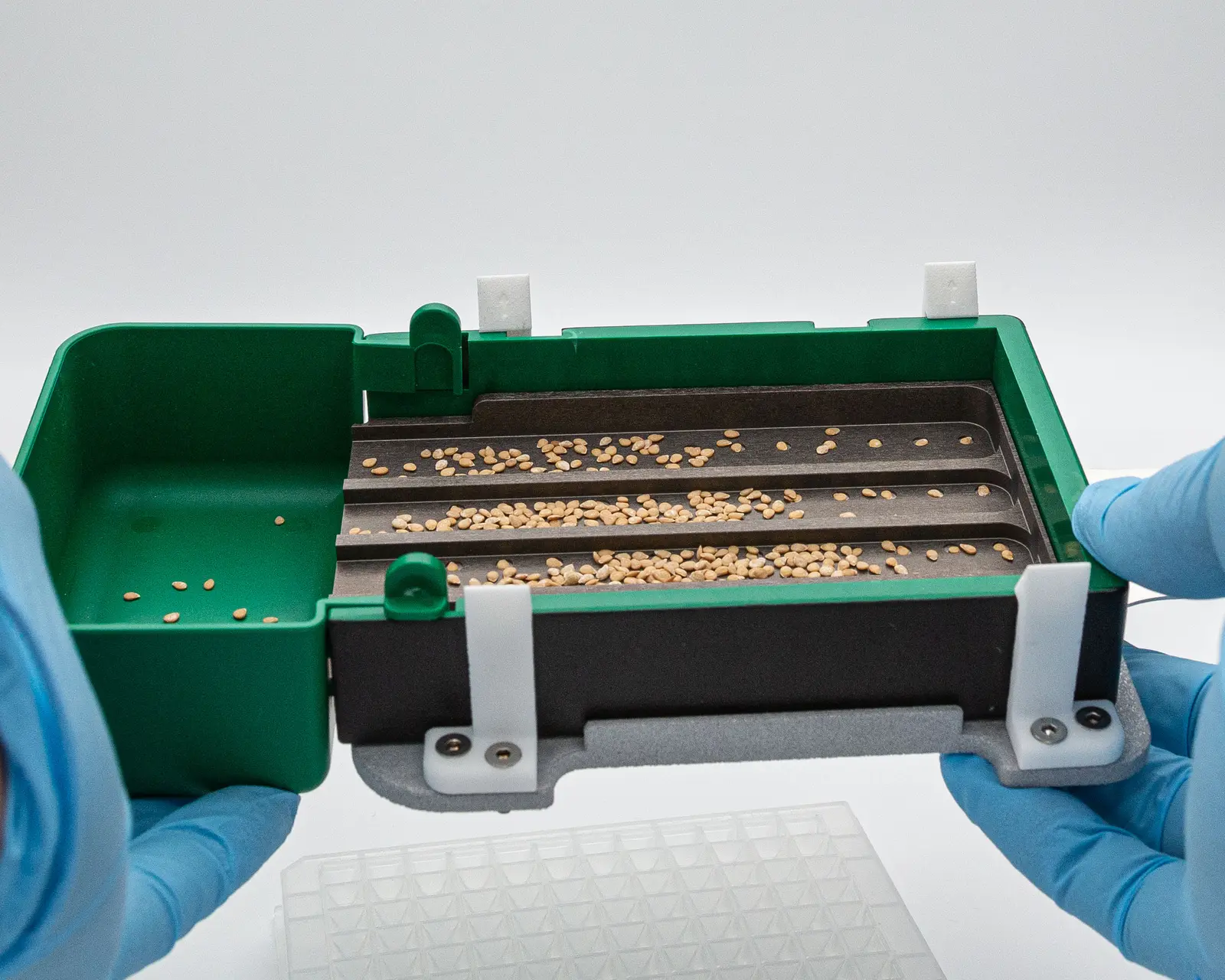
If you sow seeds into 96 well plates for genotyping, germination trials or seed bank cataloguing, there are really two routes. A manual dispenser you run yourself, or a fully automated system that runs it for you. Neither is better in the abstract. The right choice comes down to batch size, budget and how often your seed types or plate formats change.
When a manual dispenser fits better
- You process dozens to a few hundred plates a week, not thousands.
- You work with many seed types or sizes. The LabTIE Seed Dispenser handles more than 120, and you can switch between them without reconfiguring a machine.
- You want a lower upfront cost, little maintenance and no service contracts.
- You need single seed dispensing for some plates and multi seed for others, on demand.
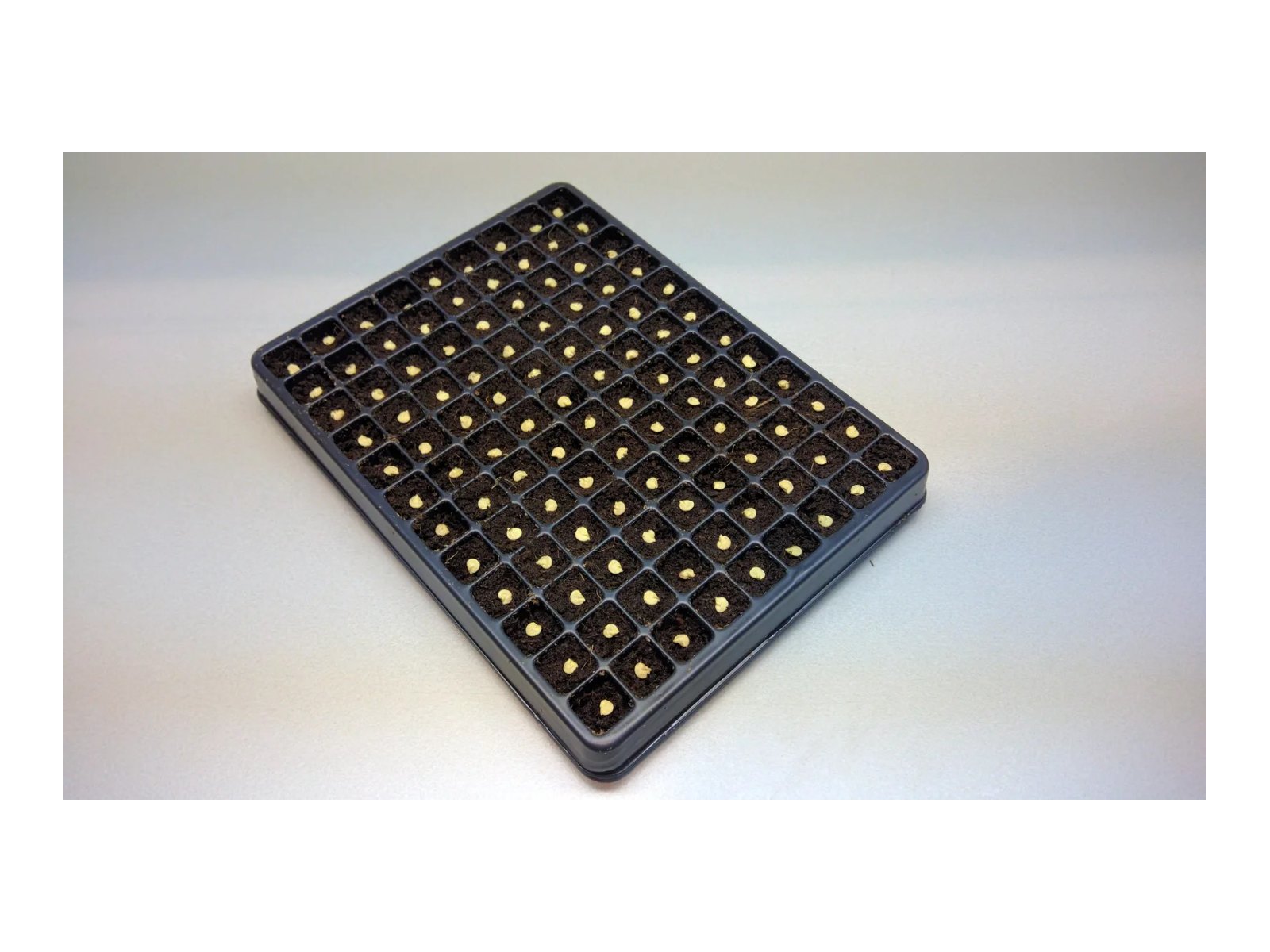
When an automated system fits better
- You run a core facility, seed bank or biobank with continuous, very high throughput.
- The same seed types and plate formats run repeatedly, so the cost of configuring a line spreads across a large volume.
- You have the budget, space and support for capital equipment.
A middle path: modular dispensing
LabTIE sits deliberately between hand counting and full automation. A manual pull slider does the dispensing, but interchangeable mesh plates let one unit adapt to 96, 100 and 384 well formats and well over 120 seed types, with no reprogramming and no new tooling. For most university, breeding program and mid size seed bank labs, that covers the throughput automated systems are built for, at a fraction of the cost and lead time.

Tell us your setup
Not sure which tier fits your lab? Tell us your typical batch size, seed types and plate format and we will recommend the right configuration, including custom mesh plates if you need them. Or explore the LabTIE Seed Dispenser range.
Related
The manual formats, per container: the 96-well seed dispenser, the 48-well plate seed dispenser for rectangular wells, and the 100-well tray seed dispenser for a cryobox tray.
Leave a Reply